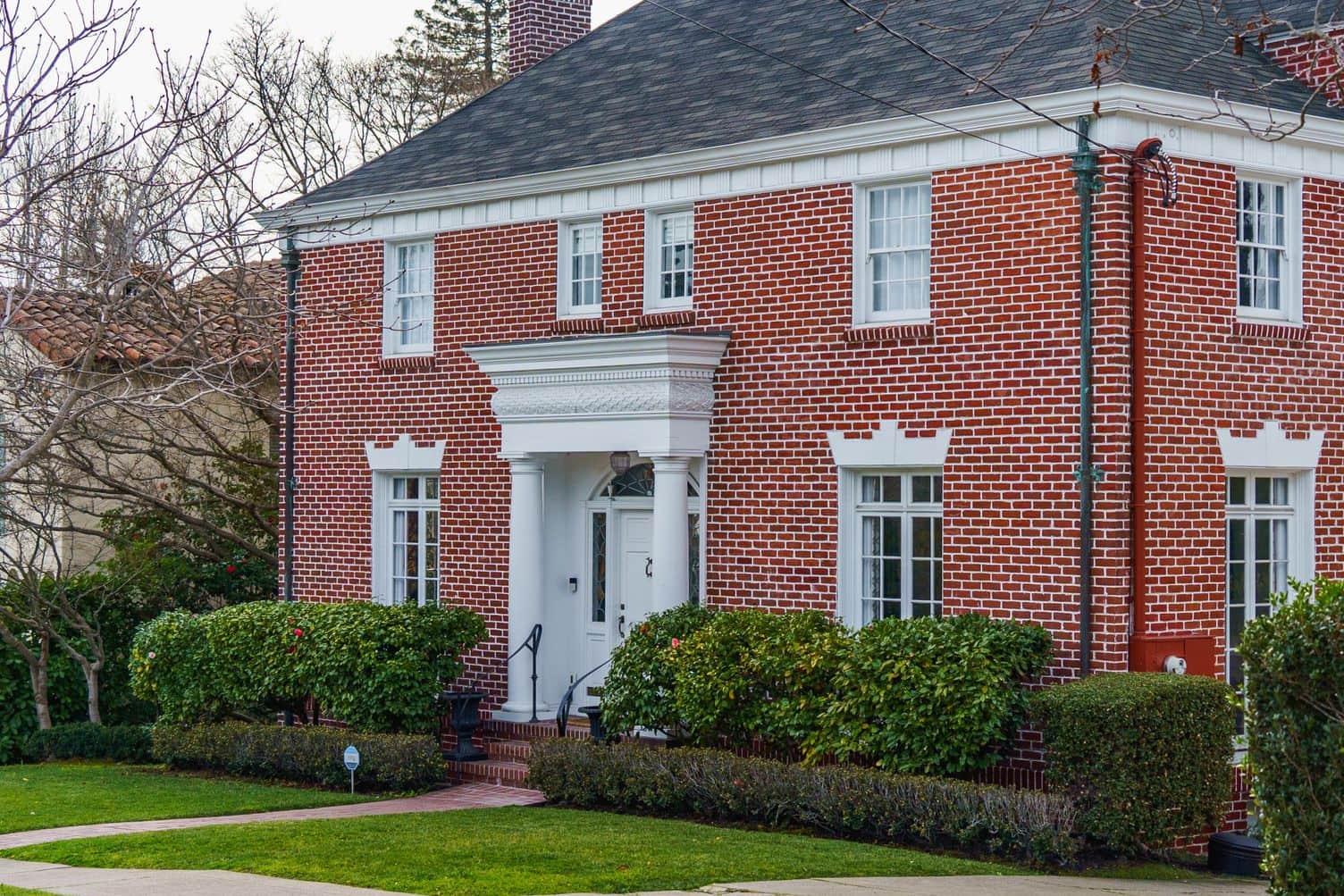
Decatur, DeKalb County
Mold Inspection, Testing and Removal in Decatur
Local mold services for Decatur, where older homes, crawl spaces, and humidity create the conditions mold needs.
- Mold inspection, testing, and remediation for Decatur homes
- We find and fix the moisture source behind the mold, not just the surface
- Serving Decatur and the surrounding Metro Atlanta area
Request an Inspection
Tell us what is going on and we will get right back to you.
Decatur is known for its tree-lined streets and its older homes, and that charm comes with mold-prone construction. Many Decatur houses are bungalows and craftsman homes built decades ago, often sitting over crawl spaces and surrounded by the same slow-draining red clay found across DeKalb County. In a humid climate, that gives mold plenty of opportunity to take hold in crawl spaces, bathrooms, and basements. We provide mold inspection, testing, and remediation throughout Decatur, with care taken to protect the older homes the city is known for.
Before & After Mold Remediation
Heavy growth removed and the space brought back to a clean, healthy condition. This is what proper removal and source correction looks like.
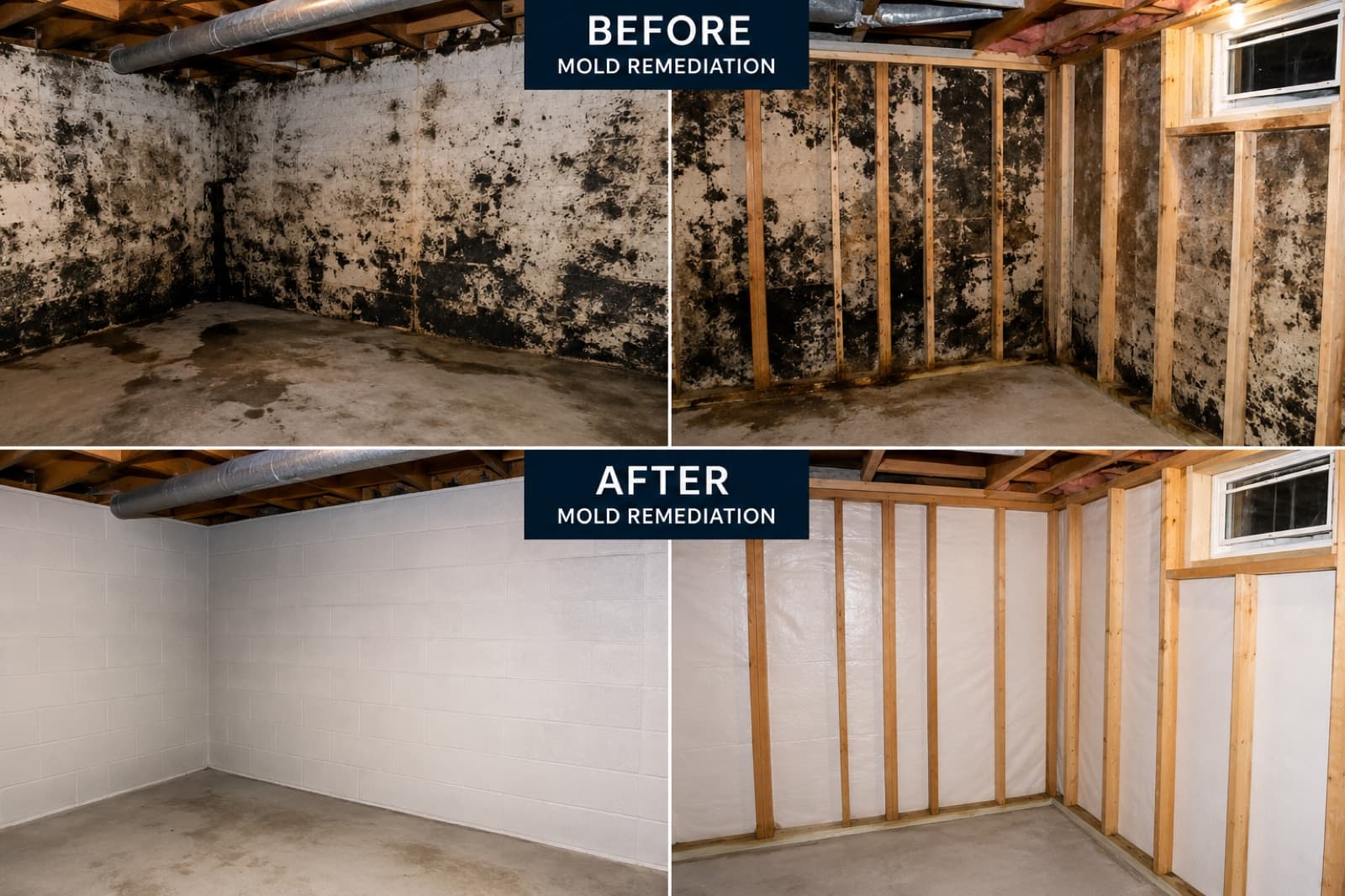
Basement wall
Heavy growth across the basement wall, removed and the surface brought back to clean material.
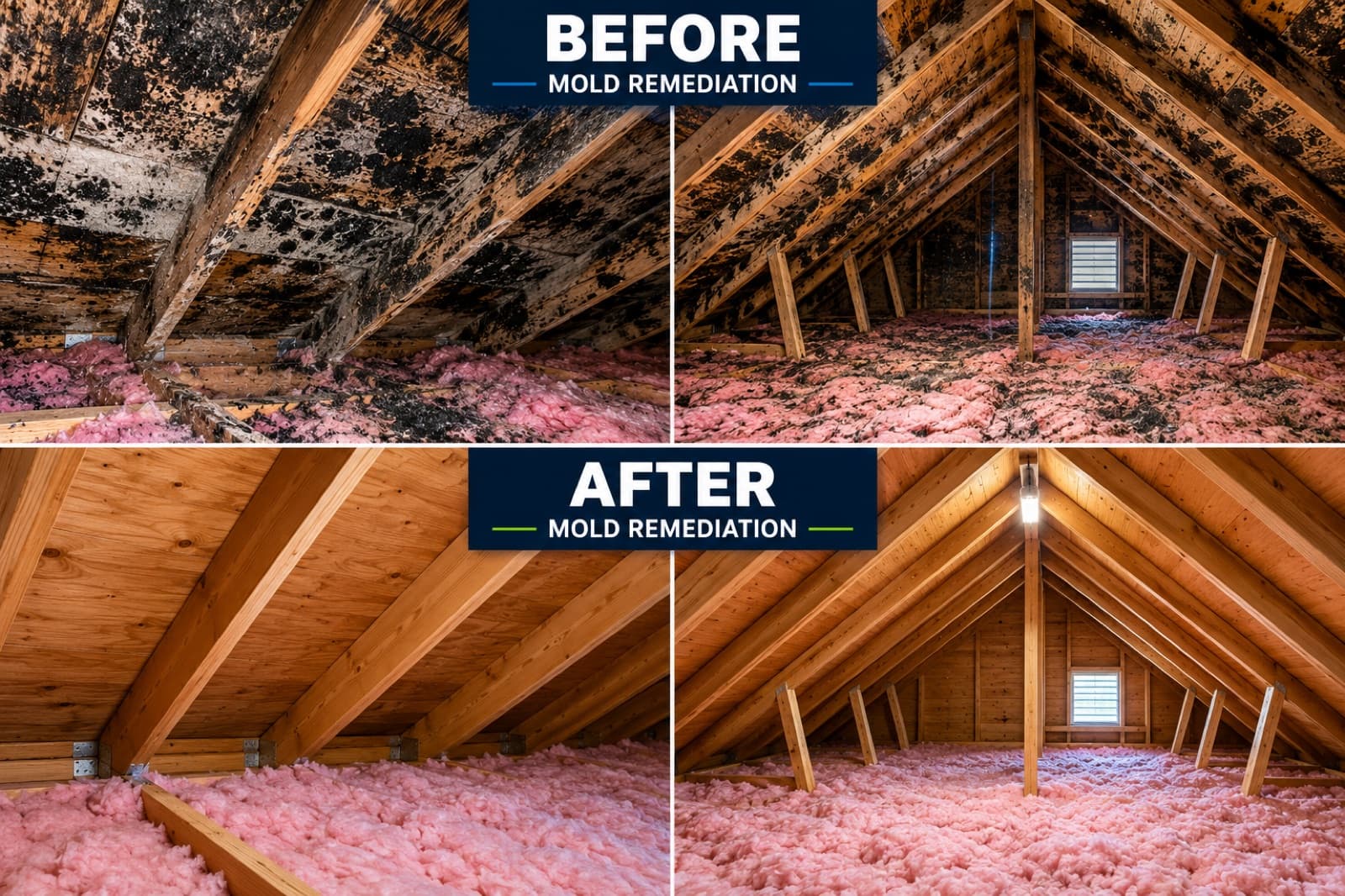
Attic rafters
Mold spread over the roof sheathing and rafters, cleaned off the wood throughout the attic.
Can Mold Like This Actually Be Removed?
Short answer: yes, even heavy black mold. Here is what that actually means for your home.
Yes, even heavy mold
Black mold and widespread growth come out the same way as any mold: we contain the area, remove what it has grown into, clean and dry, and fix the moisture so it is far less likely to return.
You can usually stay home
Because we seal off and HEPA filter the work area, most families stay in the house and just avoid the sealed zone. For bigger jobs or sensitive household members, we will tell you honestly if you should be out for a day or two.
You likely will not lose everything
Soaked drywall, carpet, and insulation usually have to go, but glass, metal, solid wood, hard plastics, and most clothing can be cleaned and kept. We go through it with you.
You will know the plan first
You get a clear written scope and a rough timeline before any work begins. No surprises, and no pressure.
How We Remove Mold the Right Way
The same structured process we follow on every Decatur job, from the first inspection to final verification.
Inspection & moisture mapping
We find the water source and the full extent of the growth, not just what you can see.
Containment
We seal the work area and use negative air pressure so spores do not spread through the home.
HEPA removal
We physically remove the mold and affected porous materials, then HEPA vacuum the area.
Drying & dehumidification
We dry the structure and bring humidity back down into a range where mold is far less likely to return.
Source correction
We fix what caused it: a vapor barrier, drainage, a dehumidifier, or crawl space encapsulation.
Clearance verification
We confirm the space is back to a normal, healthy condition before we close out the job.
Mold Services in Decatur
From the first inspection through final verification, available for homes and businesses across Decatur.

Mold Inspection
Visual inspection and moisture mapping to find the source and full extent.
Learn more →
Mold Testing & Air Sampling
Air and surface sampling with independent lab analysis when you need it confirmed.
Learn more →
Mold Removal & Remediation
Containment, HEPA filtration, removal, and cleanup of the affected area.
Learn more →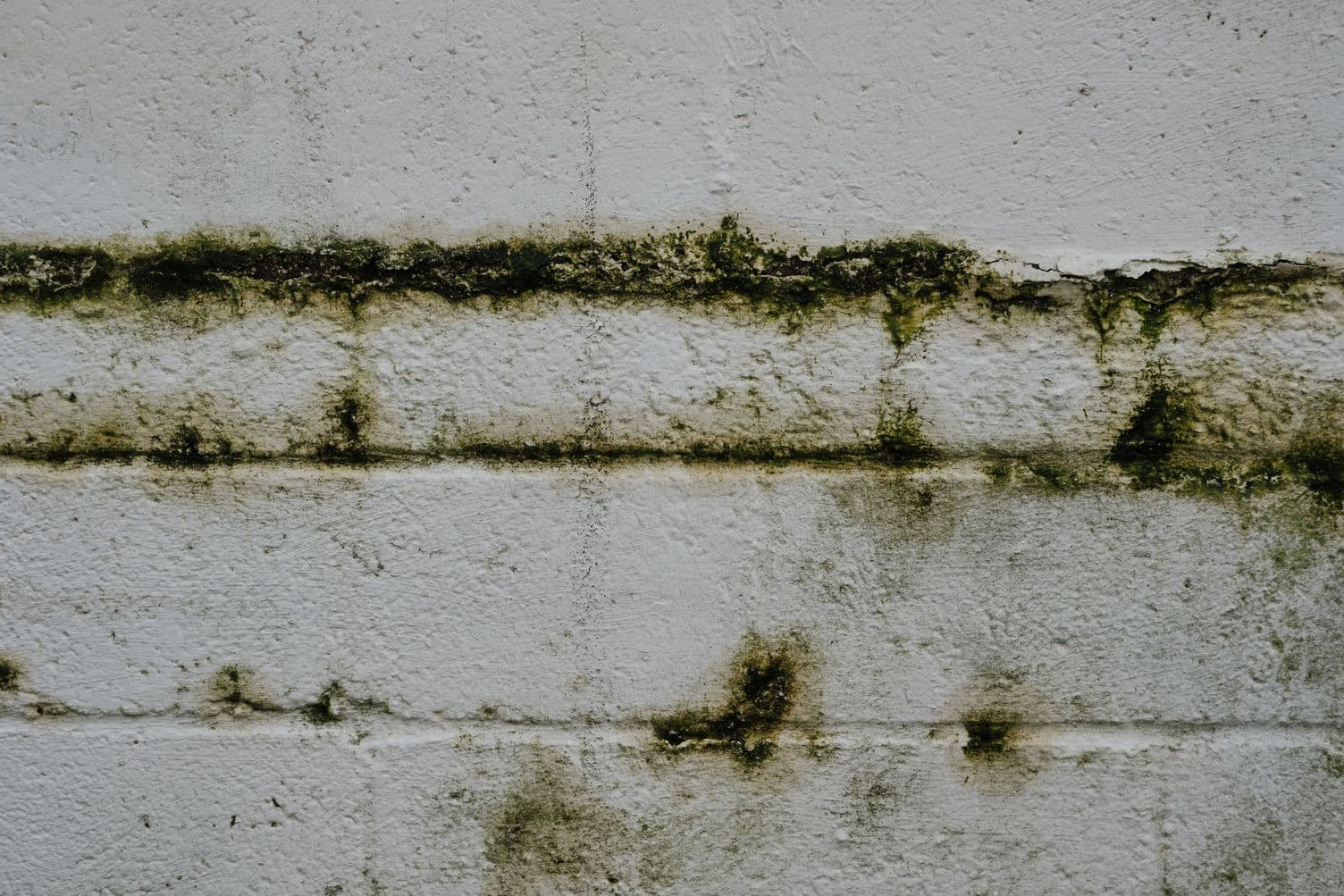
Black Mold Removal
Safe removal of heavier growth under full containment, source corrected.
Learn more →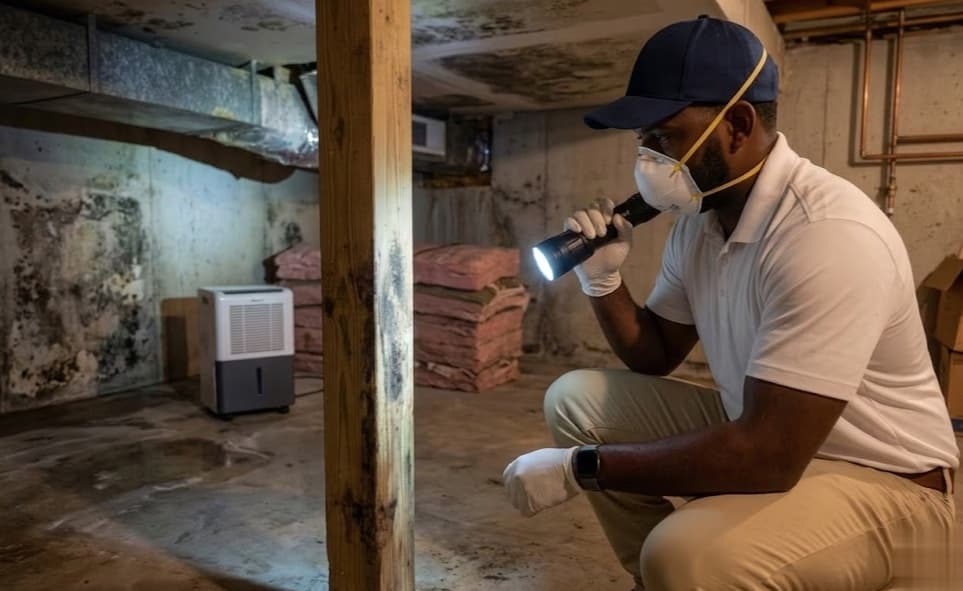
Crawl Space & Basement Mold
The most common mold sites in Metro Atlanta homes, handled at the source.
Learn more →More mold services we handle in Decatur:
- Attic Mold Removal
- Basement Mold Removal
- Bathroom Mold Removal
- Crawl Space Encapsulation
- Air Duct Mold Removal
- Water Damage & Mold
- Moisture & Humidity Control
- Emergency Mold Removal
Decatur is in DeKalb County. See more areas we serve across Metro Atlanta.
Why Decatur Homes Get Mold
Decatur is a compact, walkable city just east of Atlanta, built around its downtown square and crossed by tributaries of the South Fork Peachtree Creek that thread through neighborhoods and parks. Its housing skews older than the suburban developments farther out, dominated by 1920s through 1940s bungalows, craftsman homes, and brick Tudors on tree-lined streets, with a layer of newer infill and condos near the square. That older stock means crawl spaces without vapor barriers, original bathrooms with limited ventilation, and basements that were not built with today's moisture detailing, and those are exactly the spots where we find mold. The red clay soil common throughout DeKalb County drains slowly and holds water against foundations, keeping crawl spaces and basements damp long after the rain stops, while the mature canopy keeps lots shaded.
The neighborhoods each have their own character. Oakhurst and Winnona Park are full of close-set bungalows where crawl space and bathroom moisture is the usual culprit. Clairemont, Glennwood Estates, and the streets near Medlock Park add larger homes and finished basements where seepage and humidity collect behind drywall. Lots near the creek floodplain sit lower and take longer to dry.
Across all of it the recurring theme is moisture in older construction: a damp crawl space feeding musty air upstairs, a bathroom that never fully dries, or a basement that takes on water during heavy storms. Because the homes here often have real architectural value, our priority is removing mold properly and fixing the underlying water problem rather than tearing into more of the house than necessary.
Damp basements and crawl spaces raise a second question beyond mold, since radon enters homes through the same below-grade spaces, and the team behind Erase Mold also offers radon testing in Metro Atlanta.
Serving Every Neighborhood in Decatur
We work throughout Decatur and the surrounding Metro Atlanta area. If you do not see your neighborhood below, call us. We almost certainly cover it.
Also serving nearby Brookhaven, Dunwoody, Tucker, Stone Mountain, and the rest of DeKalb County.
What Affects the Cost of Mold Remediation
Wondering how much mold removal costs in Decatur? Every home is different, so the only accurate number is a written estimate after an inspection, but a few things determine where the cost of the work lands:
How much area is affected
A single bathroom or closet is a smaller job than a whole crawl space or basement.
Where it is in the home
A finished basement, a tight crawl space, or an attic each take a different amount of access and setup.
How far it has spread
Heavier growth and contamination that has moved into hidden spaces takes more containment and labor.
Materials that need replacing
Porous materials like drywall, insulation, and subfloor sometimes have to be removed and rebuilt.
After we inspect the home and find the moisture source, we give you a written estimate with a clear scope before any work starts.
Decatur Mold Questions
Can black mold actually be removed from my home?
Yes. Black mold is removed the same way as any other mold: we contain the area, take out the materials it has grown into, HEPA clean the surfaces, and correct the moisture that let it grow. Mold spores exist in all indoor air, so the goal is not a spore-free house, it is getting the growth and the conditions back to normal. Once the moisture source is fixed and the area is cleaned and verified, the visible mold is gone and far less likely to return.
Will I have to throw away my furniture and belongings?
Not necessarily. Porous materials that mold grows into, like drywall, insulation, carpet, and ceiling tile, usually have to be removed because they cannot be fully cleaned. But non-porous items such as glass, metal, sealed or solid wood, hard plastics, and most clothing can usually be cleaned and kept. We go through it with you rather than throwing things out by default.
What is the difference between mold removal and mold remediation?
"Removal" sounds like every spore is gone, but spores are a normal part of the air in every home, so that is not realistic. "Remediation" is the accurate term: we remove the active growth and the materials it has spread into, then bring your home back to normal, healthy mold levels by fixing the moisture behind it. We use both words because people search for "removal," but remediation is what actually protects you.
Does homeowners insurance cover mold?
Sometimes. Mold from a sudden, accidental event like a burst pipe is more often covered, while mold from a slow leak, high humidity, or flooding is usually not, and many policies cap how much they pay for mold. It comes down to your specific policy, so it is worth checking with your insurer.
We are renovating a 1930s bungalow in Oakhurst. Should we check for mold before we open up walls?
It is worth it. Older Oakhurst and Winnona Park bungalows often hide moisture in crawl spaces, behind original bathroom tile, and inside walls that have seen decades of small leaks, and renovation work can disturb and spread it. Testing and an inspection before demolition tells you what you are dealing with so the project does not stall partway through.
Our Decatur home backs up to a creek and the basement smells musty after rain. Is that mold?
A musty smell after rain usually points to moisture, and homes near the South Fork Peachtree Creek tributaries sit on lower, slower-draining ground that stays damp longer. The smell often comes from mold growing on cool basement surfaces or in a crawl space. We can test the air and surfaces, find where the water is entering, and address both the growth and the source.
How do you protect the character of an older Decatur home during mold removal?
Many Decatur homes have real architectural value, so our goal is to remove mold and correct the underlying water problem while disturbing as little original material as possible. We contain the work area, target the affected materials rather than gutting whole rooms, and fix the moisture source so the same area does not regrow.
Concerned About Mold in Decatur?
Tell us what you are seeing or smelling and we will help you figure out the next step. Mold can begin to grow on damp surfaces within 24 to 48 hours, so it pays to look into it early.