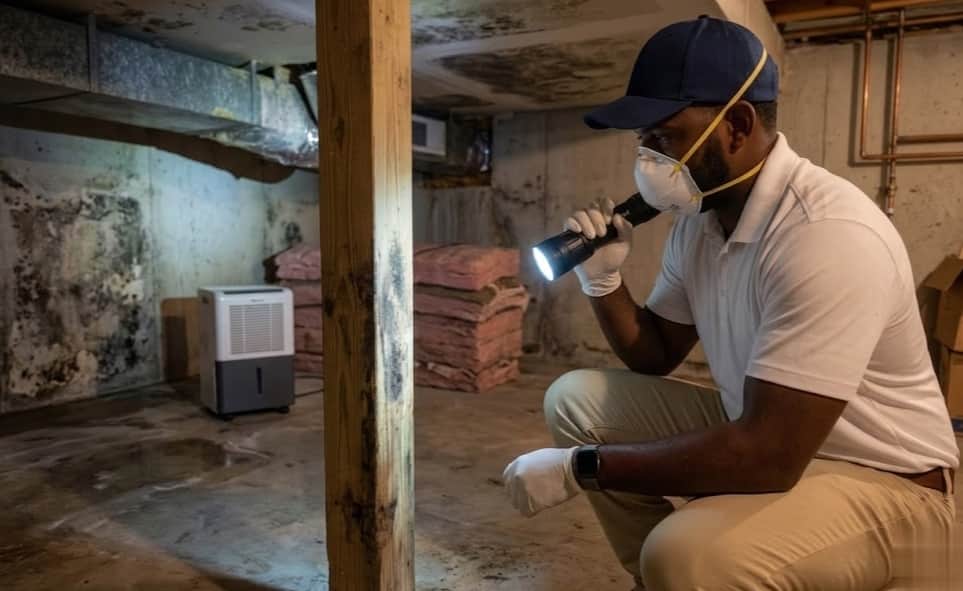
Metro Atlanta
Mold Inspection for Metro Atlanta Homes and Businesses
Find out where mold is growing, how far it has spread, and what is feeding it, with a clear written assessment.
- Inspection that pinpoints the moisture source, not just the mold
- Containment-first work to limit the spread of spores
- A clear written scope and timeline before any work begins
Request an Inspection
Tell us what is going on and we will get right back to you.
Quick answer
A thorough visual and moisture inspection to find where mold is growing and the conditions causing it.
A mold inspection is the starting point for almost every mold problem. Before anything is cleaned or removed, it helps to understand exactly where mold is present, how widespread it is, and what moisture source is allowing it to grow. Our inspectors combine a careful visual review with moisture readings to build that picture, then explain it to you in plain language. Because mold needs moisture to grow, the inspection looks just as hard at water as it does at the mold itself. The goal is a clear, honest assessment you can act on, not a sales pitch.
What Our Mold Inspection Includes
Visual assessment of common trouble spots
We examine the areas where mold most often appears in Atlanta-area homes: basements, crawl spaces, bathrooms, around windows, behind and beneath appliances, and near any past or present water damage. Musty odors and staining are often the first clues, and we trace them back to a likely source.
Moisture and humidity readings
Moisture meters and humidity readings help us find damp materials that are not obvious to the eye, such as wet drywall behind a baseboard or elevated humidity in a closed-off space. The EPA notes that the key to mold control is moisture control, so locating the water is central to the inspection.
Looking for hidden growth
Mold can grow out of sight inside wall cavities, under flooring, above ceiling tiles, or within HVAC systems. Where conditions suggest hidden growth, we note it and discuss whether limited investigation or testing would help confirm what is happening before any work is planned.
A clear written summary
You receive a straightforward summary of what we found, where the moisture is coming from, and what we would recommend as next steps. If the situation is minor, we will tell you. If it warrants testing or remediation, we explain why and what that would involve.
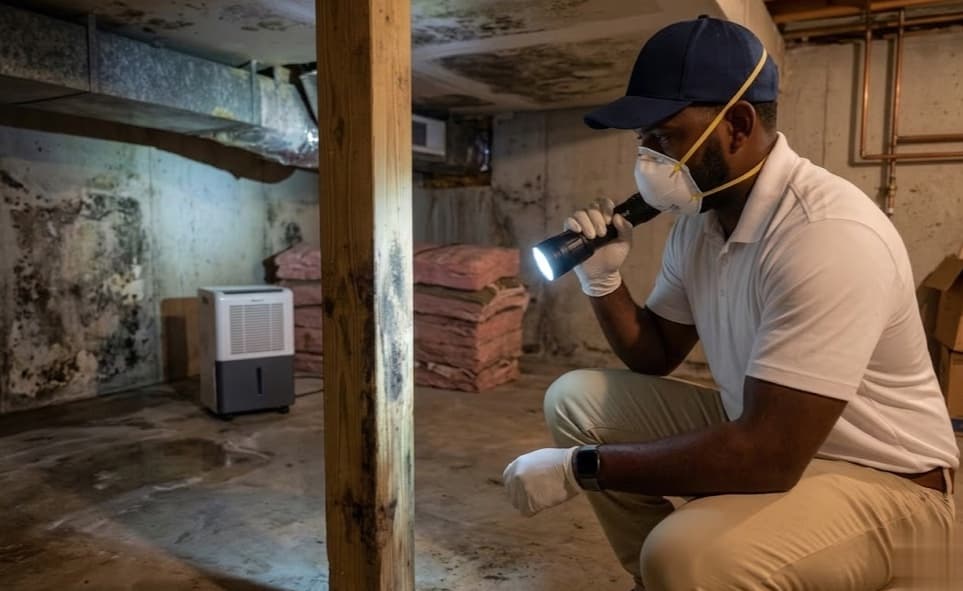
How It Works
Walkthrough and history
We start by talking through what you have noticed: visible spots, musty smells, recent leaks or flooding, or humidity that never seems to drop. That history points the inspection toward the most likely problem areas.
Visual inspection
We inspect accessible areas for visible mold, water staining, and the building conditions that allow moisture to collect, from plumbing and roof leaks to poor drainage and ventilation.
Moisture mapping
Using moisture meters and humidity readings, we identify damp materials and elevated indoor humidity that the eye alone would miss.
Findings and recommendations
We walk you through what we found and provide a written summary, including whether testing or remediation makes sense and what the moisture source appears to be.
Signs This May Be What You Need
- A persistent musty or earthy smell, even when nothing is visible
- Visible spots or discoloration on walls, ceilings, grout, or trim
- A recent leak, flood, or appliance overflow that stayed wet
- Condensation on windows or high indoor humidity
- Allergy-like symptoms that ease when you leave the building
- Buying or selling a home and wanting a clear picture before closing

Why Metro Atlanta Homeowners Call Erase Mold
We are a local crew that does mold and water work the right way: find the moisture source, contain the area, and document the job so you know exactly what happened and why.
- Local to Metro Atlanta and its humid climate
- We treat the cause, not just the surface mold
- Containment-first work to protect the rest of your home
- Plain-language answers and documentation at every step
The damp crawl spaces and basements where mold takes hold are also where radon enters a home, so our sister company Erase Radon handles radon testing and mitigation for the same Metro Atlanta homes.
Request an InspectionFrequently Asked Questions
Do I need a mold inspection if I can already see the mold?
Sometimes a small, visible patch with an obvious cause does not require a full inspection. But visible mold is often only part of the picture, and an inspection helps confirm how far it has spread and what moisture source is behind it so the problem does not simply return after cleanup.
Will an inspection tell me what type of mold I have?
A visual inspection identifies where mold is growing and the conditions causing it. Identifying a specific mold type requires sampling and lab analysis, which is part of mold testing. For most homeowners, the practical question is where the mold and moisture are, not the exact species, because the response is similar either way: remove the mold and fix the water.
Is the company a licensed mold inspector in Georgia?
Georgia does not license or certify mold inspectors or remediation companies, so no company in the state can truthfully claim a Georgia mold license. Because the state does not regulate this work, it is worth asking any company about its training and approach before hiring.
How long does a mold inspection take?
A typical residential inspection takes one to a few hours depending on the size of the home and how many areas need attention. Larger properties or hidden moisture issues can take longer. We focus on being thorough rather than rushing.
Cost and Insurance
What affects the cost?
Every situation is different, so we do not quote a price before we know what we are dealing with. Cost depends on the size of the affected area, how much material has to be removed, how hard the growth or moisture is to reach, the type and extent of containment needed, and any moisture repairs behind the problem. You get a written estimate after an inspection, so the scope and what is included are clear before any work begins.
Will insurance cover it?
It depends on your policy and the cause. Sudden and accidental events, such as a burst pipe, are more often covered, while gradual leaks, long-term seepage, neglected maintenance, and flooding are commonly excluded or need separate coverage, and many policies cap mold-related costs. We cannot promise what your policy will pay, so review your own policy and speak with your insurer about your situation. We can provide documentation of the conditions we find and the work performed to support a claim.
Related Services
Mold Testing and Air Sampling
Air sampling and surface testing to document mold conditions, compare indoor air to an outdoor baseline, and create a reference point.
Learn more →Mold Removal and Remediation
Containment, removal of mold-affected materials, cleaning of salvageable surfaces, and correction of the moisture source behind the growth.
Learn more →Post-Remediation and Clearance Testing
Independent verification after remediation, using a visual review and air sampling to document that the area has returned to a normal condition.
Learn more →Mold Service Across Metro Atlanta
We provide mold inspection and the rest of our mold services throughout the Metro Atlanta area. Find help in your city or county:
- Mold removal in Atlanta
- Mold inspection in Sandy Springs
- Mold removal in Marietta
- Mold remediation in Roswell
- Mold inspection in Alpharetta
- Mold removal in Decatur
- Mold remediation in Smyrna
- Mold removal in Dunwoody
- Mold inspection in Brookhaven
- Mold removal in Johns Creek
- Mold remediation in Fulton County
- Mold removal in Cobb County
- Mold inspection in DeKalb County
- Mold removal in Gwinnett County
See all of the areas we serve across Metro Atlanta.
Concerned About Mold in Your Home?
Tell us what you are seeing or smelling and we will help you figure out the next step. Mold can begin to grow on damp surfaces within 24 to 48 hours, so it pays to look into it early.