Metro Atlanta
Attic Mold Removal for Metro Atlanta Homes
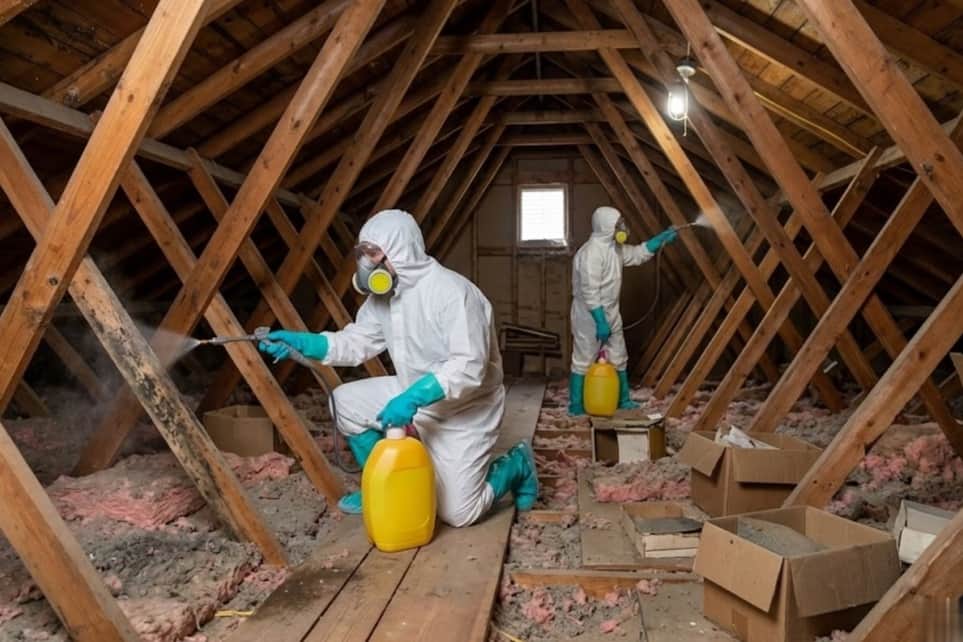
We remove mold from roof sheathing and framing and fix the leak, ventilation, or fan problem that put it there.
- Inspection that pinpoints the moisture source, not just the mold
- Containment-first work to limit the spread of spores
- A clear written scope and timeline before any work begins
Request an Inspection
Tell us what is going on and we will get right back to you.
Quick answer
Removal of mold on roof sheathing and framing, plus correction of the roof leaks, ventilation problems, and misvented fans that cause it.
Attic mold is one of the more common problems we see in the Atlanta area, and it almost always comes down to moisture that has nowhere to go. Warm, humid air rises into the attic, meets cold roof sheathing in the cooler months, and condenses, leaving the wood damp enough for mold to take hold. Roof leaks, blocked soffit vents, and bathroom or kitchen fans that dump moist air into the attic instead of outside all make it worse. The dark staining you see on the underside of the roof decking is the result. Our job is to remove the mold and, just as important, correct the moisture source so it is far less likely to grow back. We will not paint over the problem and call it solved.
What Our Attic Mold Removal Includes
Find the moisture source first
Before any cleanup, we identify why the attic is wet. The usual culprits are a roof or flashing leak, inadequate attic ventilation, missing or compressed insulation, or an exhaust fan venting into the attic rather than to the exterior. The EPA notes that the key to mold control is moisture control, so this comes first.
Remove mold from sheathing and framing
Roof sheathing and framing are semi-porous, so where the wood is structurally sound we clean and HEPA vacuum the surfaces rather than tearing out the roof deck. Materials that are rotted or too far gone, along with mold-laden insulation, are removed and bagged. The goal is to physically remove the growth, not just treat it.
Correct ventilation and venting
A balanced soffit-to-ridge ventilation path keeps attic air moving and dry. We point out blocked or missing vents and reroute any bathroom or kitchen exhaust fans that terminate in the attic so they vent fully to the outside, which is one of the most common hidden causes of attic mold.
Document the work and recommend next steps
You receive clear records of what was removed and cleaned, along with practical recommendations for keeping the attic dry, from insulation and ventilation fixes to coordinating roof repairs. Where useful, we can arrange post-remediation testing.
How It Works
Inspect and trace the moisture
We inspect the attic for visible mold, water staining, and damp sheathing, and trace it back to the source: a leak, a ventilation shortfall, or a misvented fan.
Set up containment
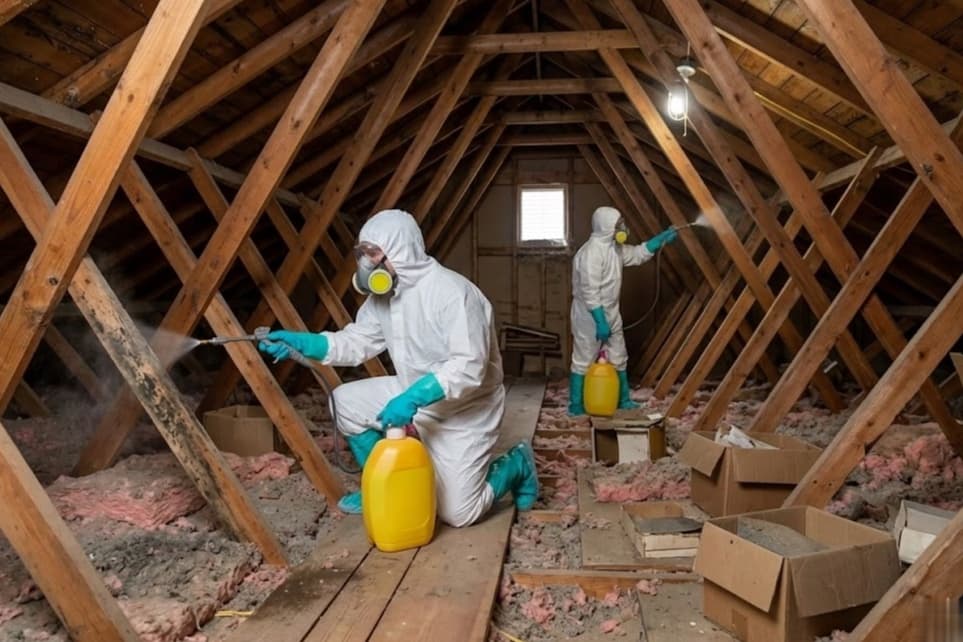
We isolate the attic access and use HEPA air filtration so spores are not carried down into the living space during the work.
Remove and clean
Mold-affected insulation and unsalvageable materials are removed and bagged, and sound sheathing and framing are cleaned and HEPA vacuumed.
Fix the cause
We address the ventilation, fan venting, or leak so the attic can stay dry, coordinating roofing repairs where they are needed.
Document and verify
You get written records of the work, and where it adds value, post-remediation testing helps confirm the area has returned to a normal condition.
Signs This May Be What You Need
- Dark staining or fuzzy growth on the underside of the roof decking
- A bathroom or kitchen exhaust fan that vents into the attic
- Frost, condensation, or damp insulation in the attic during cooler months
- A musty smell coming from the attic or upper rooms
- A past or current roof leak, with water staining near it
- Blocked, painted-over, or missing soffit and ridge vents

Why Metro Atlanta Homeowners Call Erase Mold
We are a local crew that does mold and water work the right way: find the moisture source, contain the area, and document the job so you know exactly what happened and why.
- Local to Metro Atlanta and its humid climate
- We treat the cause, not just the surface mold
- Containment-first work to protect the rest of your home
- Plain-language answers and documentation at every step
The damp crawl spaces and basements where mold takes hold are also where radon enters a home, so our sister company Erase Radon handles radon testing and mitigation for the same Metro Atlanta homes.
Request an InspectionFrequently Asked Questions
What causes mold to grow in an attic?
Almost always moisture. Warm, humid air rising into a poorly ventilated attic condenses on cold roof sheathing, and roof leaks or exhaust fans venting into the attic add even more water. In humid Atlanta, attics that cannot breathe stay damp long enough for mold to grow on the wood. Removing the mold without fixing the ventilation or leak just sets up the same problem again.
Do you have to replace the roof decking to remove attic mold?
Usually not. Roof sheathing is semi-porous, so where the wood is still structurally sound we clean and HEPA vacuum it rather than tearing out the deck. Replacement is reserved for wood that is rotted or has lost integrity. Mold-laden insulation, on the other hand, is typically removed because it is porous and hard to clean.
Is attic mold dangerous?
Any indoor mold can affect people who are sensitive to it, particularly those with asthma, allergies, a weakened immune system, or chronic lung conditions, and attic spores can drift into the living space. We will not use scare tactics about it. The sensible response is to remove the mold properly and correct the moisture so it is far less likely to come back.
Will my bathroom fan really cause attic mold?
It can, and it is one of the most common hidden causes we find. A fan that dumps warm, moist shower air into the attic instead of venting outside leaves the sheathing damp, especially in cooler months. Rerouting the fan to vent fully to the exterior is often a key part of the fix.
Cost and Insurance
What affects the cost?
Every situation is different, so we do not quote a price before we know what we are dealing with. Cost depends on the size of the affected area, how much material has to be removed, how hard the growth or moisture is to reach, the type and extent of containment needed, and any moisture repairs behind the problem. You get a written estimate after an inspection, so the scope and what is included are clear before any work begins.
Will insurance cover it?
It depends on your policy and the cause. Sudden and accidental events, such as a burst pipe, are more often covered, while gradual leaks, long-term seepage, neglected maintenance, and flooding are commonly excluded or need separate coverage, and many policies cap mold-related costs. We cannot promise what your policy will pay, so review your own policy and speak with your insurer about your situation. We can provide documentation of the conditions we find and the work performed to support a claim.
Related Services
Mold Removal and Remediation
Containment, removal of mold-affected materials, cleaning of salvageable surfaces, and correction of the moisture source behind the growth.
Learn more →Mold Inspection
A thorough visual and moisture inspection to find where mold is growing and the conditions causing it.
Learn more →Moisture & Humidity Control
Finding and fixing the moisture source and keeping indoor humidity in the 30 to 50 percent range so mold is far less likely to return.
Learn more →Mold Service Across Metro Atlanta
We provide attic mold removal and the rest of our mold services throughout the Metro Atlanta area. Find help in your city or county:
- Mold removal in Atlanta
- Mold inspection in Sandy Springs
- Mold removal in Marietta
- Mold remediation in Roswell
- Mold inspection in Alpharetta
- Mold removal in Decatur
- Mold remediation in Smyrna
- Mold removal in Dunwoody
- Mold inspection in Brookhaven
- Mold removal in Johns Creek
- Mold remediation in Fulton County
- Mold removal in Cobb County
- Mold inspection in DeKalb County
- Mold removal in Gwinnett County
See all of the areas we serve across Metro Atlanta.
Concerned About Mold in Your Home?
Tell us what you are seeing or smelling and we will help you figure out the next step. Mold can begin to grow on damp surfaces within 24 to 48 hours, so it pays to look into it early.