Metro Atlanta
Crawl Space Encapsulation for Humid Atlanta Homes
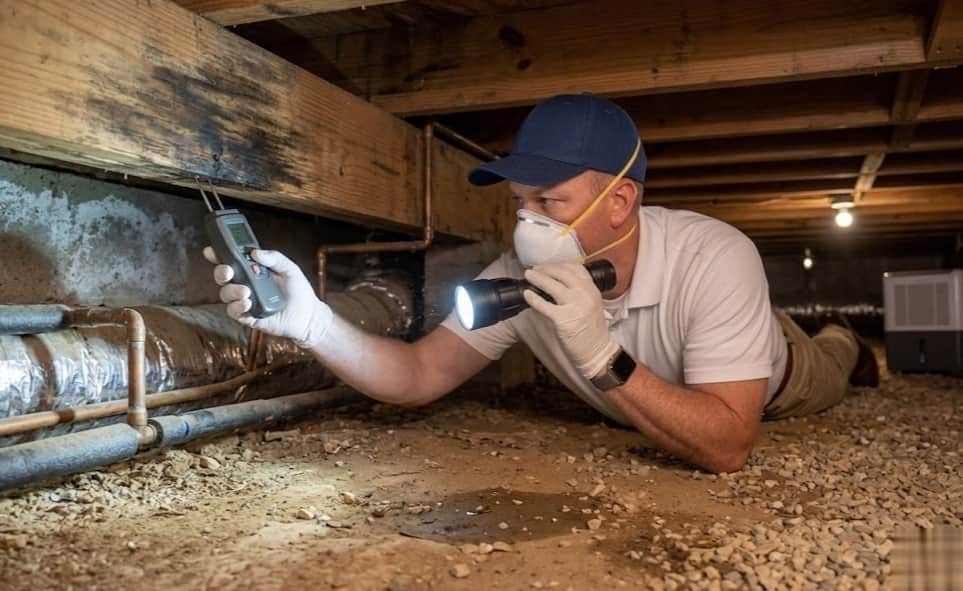
Seal the crawl space against ground moisture and control humidity so the conditions that feed mold no longer exist.
- Inspection that pinpoints the moisture source, not just the mold
- Containment-first work to limit the spread of spores
- A clear written scope and timeline before any work begins
Request an Inspection
Tell us what is going on and we will get right back to you.
Quick answer
Sealing the crawl space with a heavy vapor barrier and dehumidification to control moisture and prevent recurring mold in humid Atlanta.
In a climate as humid as Atlanta, a vented dirt crawl space is a constant source of moisture, and moisture is what mold needs to grow. Encapsulation is the longer-term answer to that problem. Instead of repeatedly cleaning up mold that keeps coming back, encapsulation seals the crawl space off from ground moisture and humid outdoor air using a heavy vapor barrier, sealed vents and penetrations, and dehumidification. The result is a dry, controlled space that no longer feeds damp air up into the home. Encapsulation is most valuable after mold has been properly removed and any drainage problems are corrected, because it is a prevention strategy rather than a cleanup. Done well, it addresses the root cause: the EPA notes that the key to mold control is moisture control, and a dry crawl space is exactly that.
What Our Crawl Space Encapsulation Includes
Prepare the crawl space
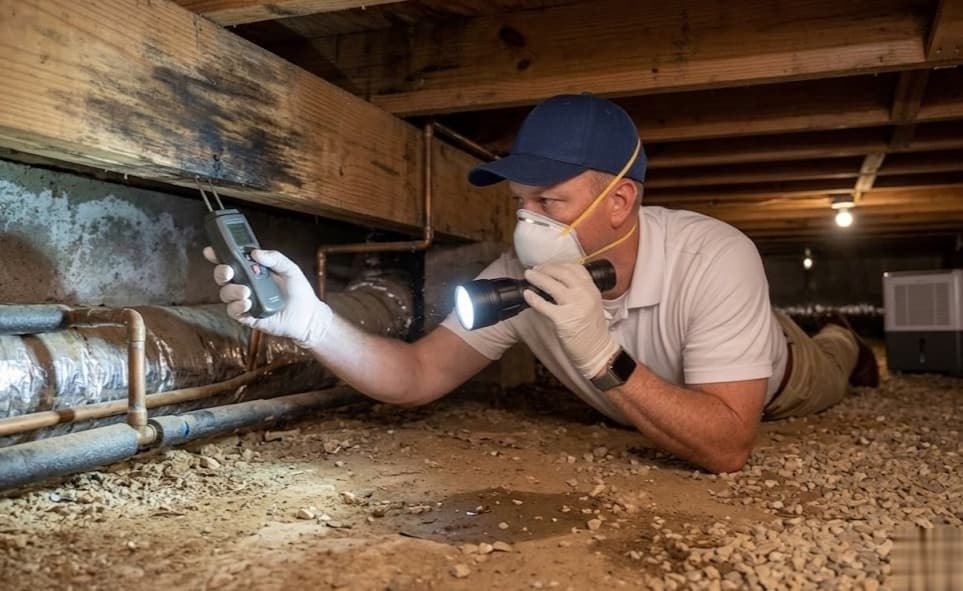
Encapsulation works best on a clean, dry foundation. We confirm that any existing mold has been remediated, debris and old failed barriers are removed, and standing water or drainage problems are corrected first. Sealing moisture in does no good, so the space has to be dry before it is closed up.
Install a heavy-duty vapor barrier
We cover the soil and run a durable vapor barrier up the foundation walls, sealing seams and securing it against piers and penetrations. This blocks the steady stream of moisture that rises out of Atlanta red clay, which is one of the main reasons local crawl spaces stay damp.
Seal vents and air leaks
Open foundation vents let humid outdoor air into the crawl space, where it condenses on cooler surfaces. As part of encapsulation we seal vents and air leaks so the space is no longer exchanging air with the humid outdoors.
Add dehumidification and humidity control
A sealed crawl space is paired with dehumidification to hold humidity in the recommended 30 to 50 percent range. Keeping the space consistently dry is what prevents mold from returning, and it is the piece that makes encapsulation a lasting solution rather than a temporary one.
How It Works
Assess and prepare
We evaluate the crawl space, confirm that any mold has been remediated, and correct standing water, drainage, or leaks so the space is clean and dry before sealing.
Clear and clean the space
Old failed barriers, debris, and unsalvageable insulation are removed so the new vapor barrier sits against a clean foundation and soil.
Install the vapor barrier
A heavy-duty vapor barrier is laid over the soil and run up the walls, with seams sealed and the barrier secured around piers and penetrations.
Seal vents and penetrations
Foundation vents and air leaks are sealed so humid outdoor air can no longer flow into the crawl space and condense on cooler surfaces.
Set up humidity control
We add dehumidification to hold humidity in the 30 to 50 percent range, then document the finished encapsulation and how to maintain it.
Signs This May Be What You Need
- A vented dirt crawl space with no vapor barrier, or a torn and failed one
- Recurring crawl space mold that returns after each cleanup
- High humidity and condensation under the home, especially in summer
- Musty odors and damp air rising into the living space
- Sagging or fallen insulation and damp framing
- A home in a humid Atlanta area where the crawl space never seems to dry out
Why Metro Atlanta Homeowners Call Erase Mold
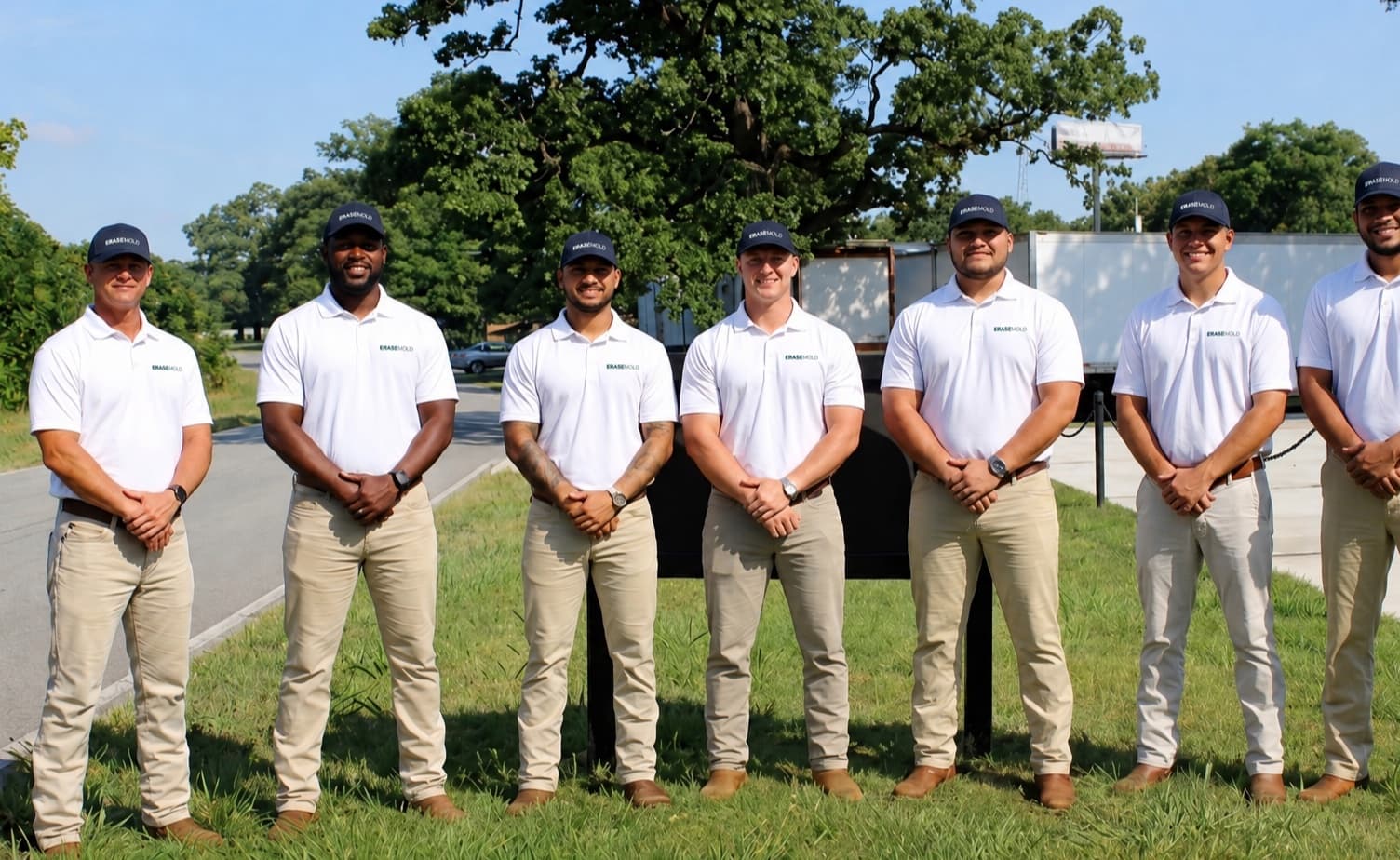
We are a local crew that does mold and water work the right way: find the moisture source, contain the area, and document the job so you know exactly what happened and why.
- Local to Metro Atlanta and its humid climate
- We treat the cause, not just the surface mold
- Containment-first work to protect the rest of your home
- Plain-language answers and documentation at every step
The damp crawl spaces and basements where mold takes hold are also where radon enters a home, so our sister company Erase Radon handles radon testing and mitigation for the same Metro Atlanta homes.
Request an InspectionFrequently Asked Questions
What is crawl space encapsulation and how does it prevent mold?
Encapsulation seals the crawl space off from ground moisture and humid outdoor air using a heavy vapor barrier over the soil and walls, sealed vents, and dehumidification. Because mold needs moisture to grow, taking that moisture away removes the condition mold depends on. In humid Atlanta, where red clay and high humidity keep crawl spaces damp, encapsulation addresses the root cause rather than the symptom.
Should I encapsulate before or after mold removal?
After. Encapsulation is a prevention strategy, not a cleanup, so any existing mold should be remediated and the space cleaned and dried first. Sealing a barrier over mold or standing water just traps the problem. We confirm the crawl space is clean and dry before encapsulating it.
Will encapsulation completely prevent mold from ever returning?
No company can promise a home will never have mold, because spores exist everywhere and the goal is normal fungal conditions, not zero spores. What encapsulation does is remove the moisture that mold depends on, which makes recurrence far less likely. Pairing it with dehumidification and basic maintenance is what keeps the space reliably dry.
Do I still need a dehumidifier in an encapsulated crawl space?
Usually yes. The vapor barrier and sealed vents stop most moisture from entering, but a dehumidifier holds humidity in the recommended 30 to 50 percent range and handles any moisture that remains. The combination is what keeps the space consistently dry, which is the whole point of encapsulating it.
Cost and Insurance
What affects the cost?
Every situation is different, so we do not quote a price before we know what we are dealing with. Cost depends on the size of the affected area, how much material has to be removed, how hard the growth or moisture is to reach, the type and extent of containment needed, and any moisture repairs behind the problem. You get a written estimate after an inspection, so the scope and what is included are clear before any work begins.
Will insurance cover it?
It depends on your policy and the cause. Sudden and accidental events, such as a burst pipe, are more often covered, while gradual leaks, long-term seepage, neglected maintenance, and flooding are commonly excluded or need separate coverage, and many policies cap mold-related costs. We cannot promise what your policy will pay, so review your own policy and speak with your insurer about your situation. We can provide documentation of the conditions we find and the work performed to support a claim.
Related Services
Crawl Space Mold Removal
Removal of mold on joists and subflooring caused by ground moisture, missing vapor barriers, and humidity in Atlanta crawl spaces.
Learn more →Moisture & Humidity Control
Finding and fixing the moisture source and keeping indoor humidity in the 30 to 50 percent range so mold is far less likely to return.
Learn more →Mold Removal and Remediation
Containment, removal of mold-affected materials, cleaning of salvageable surfaces, and correction of the moisture source behind the growth.
Learn more →Mold Service Across Metro Atlanta
We provide crawl space encapsulation and the rest of our mold services throughout the Metro Atlanta area. Find help in your city or county:
- Mold removal in Atlanta
- Mold inspection in Sandy Springs
- Mold removal in Marietta
- Mold remediation in Roswell
- Mold inspection in Alpharetta
- Mold removal in Decatur
- Mold remediation in Smyrna
- Mold removal in Dunwoody
- Mold inspection in Brookhaven
- Mold removal in Johns Creek
- Mold remediation in Fulton County
- Mold removal in Cobb County
- Mold inspection in DeKalb County
- Mold removal in Gwinnett County
See all of the areas we serve across Metro Atlanta.
Concerned About Mold in Your Home?
Tell us what you are seeing or smelling and we will help you figure out the next step. Mold can begin to grow on damp surfaces within 24 to 48 hours, so it pays to look into it early.