Metro Atlanta
Water and Flood Damage Restoration in Metro Atlanta
From extraction and drying to mold remediation and repair, we work to take a flooded or water-damaged space back toward the way it was.
- Inspection that pinpoints the moisture source, not just the mold
- Containment-first work to limit the spread of spores
- A clear written scope and timeline before any work begins
Request an Inspection
Tell us what is going on and we will get right back to you.
Quick answer
Water cleanup, structural drying, and mold remediation after leaks and flooding, then repair back toward pre-loss condition.
When a space takes on water, restoration is the work of getting it back the way it was. That starts with extracting the standing water and pulling moisture out of saturated materials, then drying the structure all the way through, including the walls, subfloors, and cavities the water reached out of sight. Once the building is genuinely dry and the reason the water got in has been corrected, we move into reconstruction. We repair and rebuild the drywall, flooring, and finishes that had to be removed so the space is returned toward its pre-loss condition (the way it was before the damage). This is the full extraction, structural drying, and rebuild side of water work. Inspecting for and remediating mold is part of the process where dampness sat long enough to allow it, but the job here is the larger one of taking a flooded or water-damaged space and making it whole again.
What Our Water & Flood Damage Restoration Includes
Water cleanup, extraction, and mitigation
The first job is removing standing water and beginning mitigation before damage spreads. Acting quickly matters here, since damp materials can support mold growth within 24 to 48 hours, so prompt extraction is often what keeps a water event from becoming a mold event.
Structural drying with air movers and dehumidifiers
We dry the structure with air movers and dehumidifiers while moisture meters map how far the water traveled, including into walls, subfloors, and cavities you cannot see. Drying the structure thoroughly, not just the surface, is what prevents hidden mold from forming later.
Mold inspection and remediation
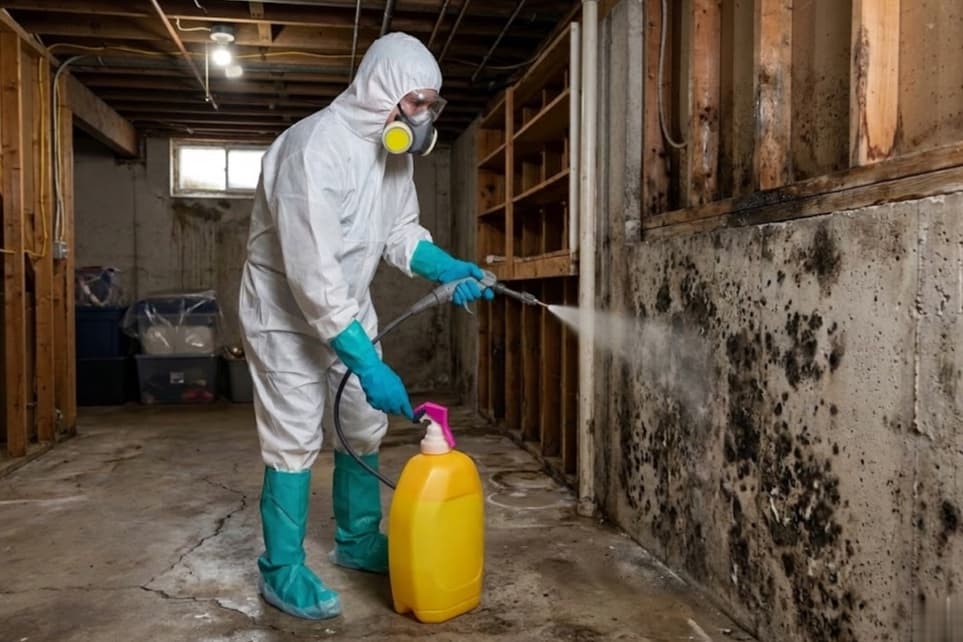
Because mold can take hold soon after water exposure, we inspect for growth and remediate where it has started. That means containing the area, removing porous materials that cannot be cleaned, cleaning salvageable surfaces, and using HEPA filtration to physically remove the growth rather than spray over it.
Correcting the water source
Drying and remediation are not finished until the reason the water got in is addressed, whether that is a failed pipe, a roof or window leak, poor drainage, or grading that sends water toward the house. Correcting the source is what makes the repair last.
Reconstruction and documentation
Once the space is dry and the source is corrected, we repair and rebuild what was removed, working to return the area toward its pre-loss condition. You also receive clear records of the moisture readings, what was removed and dried, and the work performed, which is useful for your own records and if you choose to file an insurance claim.
How It Works
Assessment and source identification
We identify where the water came from, how far it has spread, and whether mold has already begun to grow, then prioritize stopping the water and starting the dry-out.
Water extraction and mitigation
Standing water is removed and, where mold is present, the work area is contained to help keep spores from spreading into clean parts of the building.
Structural drying
Air movers and dehumidifiers dry the affected materials while moisture meters confirm progress, so the structure dries through rather than only at the surface.
Mold remediation and material removal
Materials that cannot be dried or cleaned, such as saturated drywall, insulation, or carpet padding, are removed, salvageable surfaces are cleaned and HEPA vacuumed, and any mold is remediated.
Source correction
We address the underlying water problem behind the loss so the conditions that allowed it no longer exist.
Reconstruction and records
We repair and rebuild what was removed back toward pre-loss condition and provide documentation of the readings and work performed for your records and any insurance claim.
Signs This May Be What You Need
- A burst or leaking pipe, water heater failure, or appliance overflow
- Flooding or water intrusion from heavy rain or a roof leak
- Carpet, drywall, or flooring that stayed wet for more than a day
- A musty smell or visible spots appearing after a recent water event
- Warping, buckling, or staining on floors, walls, or ceilings
Why Metro Atlanta Homeowners Call Erase Mold
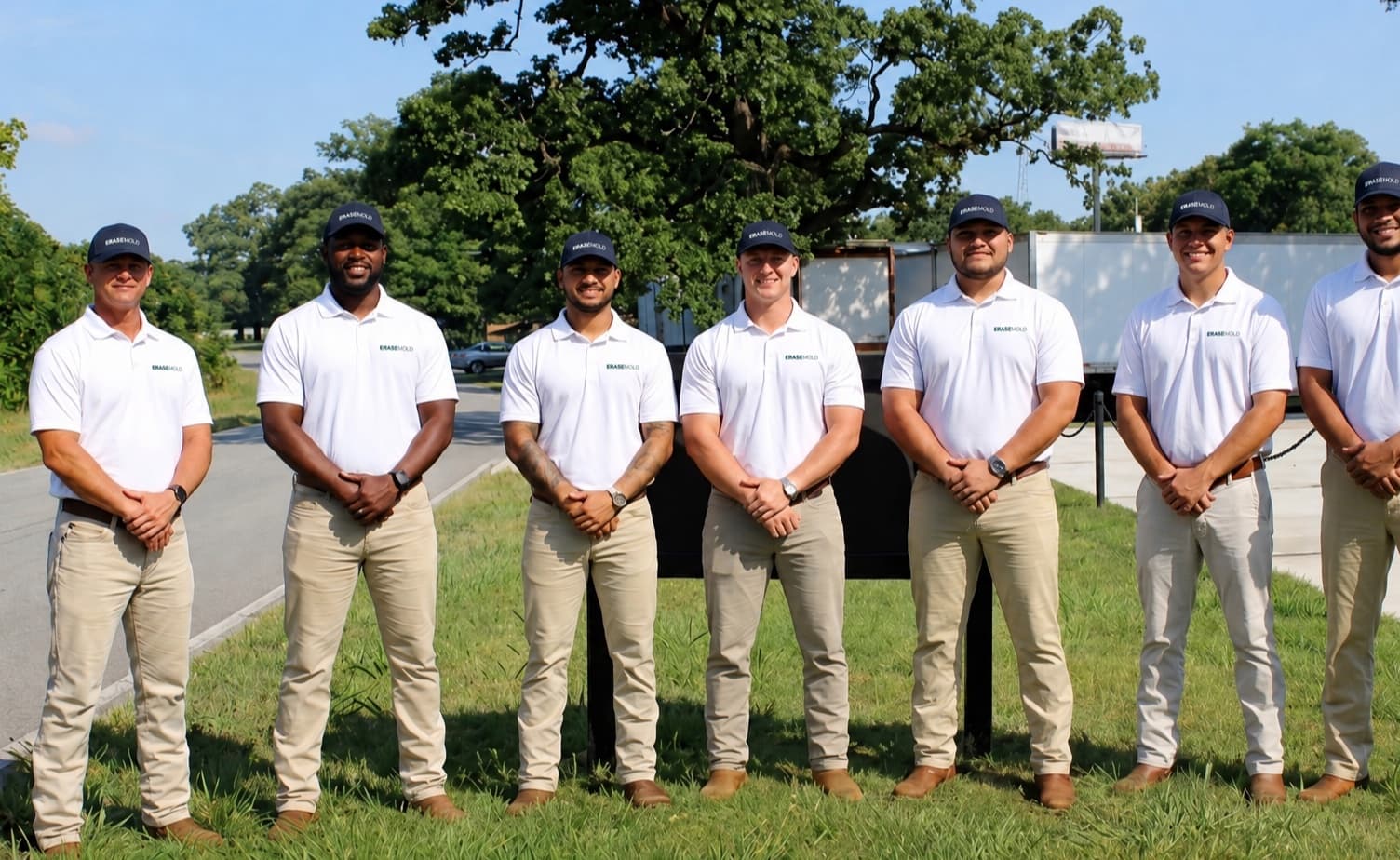
We are a local crew that does mold and water work the right way: find the moisture source, contain the area, and document the job so you know exactly what happened and why.
- Local to Metro Atlanta and its humid climate
- We treat the cause, not just the surface mold
- Containment-first work to protect the rest of your home
- Plain-language answers and documentation at every step
The damp crawl spaces and basements where mold takes hold are also where radon enters a home, so our sister company Erase Radon handles radon testing and mitigation for the same Metro Atlanta homes.
Request an InspectionFrequently Asked Questions
How quickly does mold grow after water damage?
Mold can begin to grow on damp materials within about 24 to 48 hours of water exposure. That short window is why prompt extraction and drying matter so much, since a quick, thorough dry-out is often what determines whether a water event becomes a mold problem. If materials have already stayed wet for several days, it is safer to assume mold is a real possibility and have the area assessed.
Does the work include putting the home back together, or only drying it out?
It can include both. Mitigation and drying come first to stop ongoing damage, and once the structure is dry and the source is corrected, we repair and rebuild what had to be removed, working to return the space toward its pre-loss condition. The extent of reconstruction depends on how much material was affected and what was removed during the dry-out.
Does insurance cover water and flood damage?
It depends on your policy and the cause. Sudden and accidental events such as a burst pipe are more often covered, while gradual leaks, long-term seepage, neglected maintenance, and flooding are commonly excluded or require separate coverage, and many policies cap mold-related costs. We cannot promise what your policy will pay, so review your own policy and speak with your insurer about your situation. We can provide documentation of the moisture readings and work performed to support a claim.
Can the materials be dried and saved, or do they have to be removed?
It depends on the material and how long it stayed wet. Non-porous and many semi-porous materials can often be dried and saved if we reach them quickly. Porous materials that absorbed water and sat wet, like saturated drywall, insulation, and carpet padding, usually cannot be fully restored and are removed. The aim is to save what we reasonably can while not leaving damp material in place to feed mold.
Do I always need mold remediation after a water loss?
Not always. A small amount of water cleaned and dried promptly may never support mold. The risk rises with how much water was involved, how long it stayed wet, and whether it reached hidden areas. If water sat for more than a day or two, spread into walls or floors, or left a musty smell, an assessment is the safer step before assuming everything is fine.
Cost and Insurance
What affects the cost?
Every situation is different, so we do not quote a price before we know what we are dealing with. Cost depends on the size of the affected area, how much material has to be removed, how hard the growth or moisture is to reach, the type and extent of containment needed, and any moisture repairs behind the problem. You get a written estimate after an inspection, so the scope and what is included are clear before any work begins.
Will insurance cover it?
It depends on your policy and the cause. Sudden and accidental events, such as a burst pipe, are more often covered, while gradual leaks, long-term seepage, neglected maintenance, and flooding are commonly excluded or need separate coverage, and many policies cap mold-related costs. We cannot promise what your policy will pay, so review your own policy and speak with your insurer about your situation. We can provide documentation of the conditions we find and the work performed to support a claim.
Related Services
Water Damage & Mold
Remediation of the mold an everyday leak, appliance, or damp spot left behind, plus correcting the moisture source so it is far less likely to regrow.
Learn more →Mold Removal and Remediation
Containment, removal of mold-affected materials, cleaning of salvageable surfaces, and correction of the moisture source behind the growth.
Learn more →Moisture & Humidity Control
Finding and fixing the moisture source and keeping indoor humidity in the 30 to 50 percent range so mold is far less likely to return.
Learn more →Mold Service Across Metro Atlanta
We provide water & flood damage restoration and the rest of our mold services throughout the Metro Atlanta area. Find help in your city or county:
- Mold removal in Atlanta
- Mold inspection in Sandy Springs
- Mold removal in Marietta
- Mold remediation in Roswell
- Mold inspection in Alpharetta
- Mold removal in Decatur
- Mold remediation in Smyrna
- Mold removal in Dunwoody
- Mold inspection in Brookhaven
- Mold removal in Johns Creek
- Mold remediation in Fulton County
- Mold removal in Cobb County
- Mold inspection in DeKalb County
- Mold removal in Gwinnett County
See all of the areas we serve across Metro Atlanta.
Concerned About Mold in Your Home?
Tell us what you are seeing or smelling and we will help you figure out the next step. Mold can begin to grow on damp surfaces within 24 to 48 hours, so it pays to look into it early.