Metro Atlanta
Fire and Smoke Damage Restoration for Homes and Businesses
Soot and smoke residue removal, odor control, and structural repair, working to take a fire-damaged property back toward the way it was.
- Inspection that pinpoints the moisture source, not just the mold
- Containment-first work to limit the spread of spores
- A clear written scope and timeline before any work begins
Request an Inspection
Tell us what is going on and we will get right back to you.
Quick answer
Soot and smoke residue removal, odor control, drying after firefighting water, and structural repair back toward pre-loss condition.
A fire leaves more behind than what burned. Soot and smoke residue settle onto surfaces and into materials, odors work their way into the structure, and the water used to put the fire out can soak the building and create its own damage. Restoration after a fire means dealing with all of it: securing the property, removing soot and residue, controlling odor, drying out firefighting water, cleaning affected contents, and repairing or rebuilding what was lost. We work in both residential and commercial settings, sequencing the work so the property is stabilized first and then restored toward its pre-loss condition (the way it was before the damage). Because firefighting water can soak materials, drying is part of fire restoration too, and where dampness sits long enough, mold becomes a risk that has to be checked.
What Our Fire & Smoke Damage Restoration Includes
Emergency board-up and securing the property
After a fire, an open or unstable building is exposed to weather, further water, and intrusion. Early work includes boarding up openings and securing the property so the structure is stabilized before cleanup and repair begin.
Soot and smoke residue removal
Soot and smoke residue settle onto walls, ceilings, fixtures, and contents and can continue to stain and corrode surfaces over time. We remove the residue from affected surfaces, working to clean what can be saved rather than replace everything.
Odor control and deodorization
Smoke odor can linger in materials long after the visible soot is gone. Deodorization addresses the odor at its source in the affected materials rather than masking it, so the space does not keep carrying the smell of the fire.
Drying out firefighting water and checking for mold
The water used to extinguish a fire can soak floors, walls, and cavities. We dry those materials with air movement and dehumidification, and because damp materials can support mold within 24 to 48 hours, we check for and address mold where the water sat long enough to allow it.
Content cleanup, structural repair, and inspection
We clean affected contents where they can be saved, assess the structure for safety, and repair or rebuild damaged areas, working to return the property toward its pre-loss condition. This work applies to both residential and commercial properties.
How It Works
Secure and stabilize
We board up openings and secure the property so the structure is protected from weather, water, and intrusion before restoration begins.
Assessment and inspection
We assess the extent of the fire, smoke, and water damage and inspect the structure for safety so the scope of work is based on what is actually there.
Water drying
Water left from firefighting is dried with air movers and dehumidifiers, with moisture readings confirming the structure is drying so dampness does not turn into mold.
Soot removal and deodorization
We remove soot and smoke residue from affected surfaces and contents, then deodorize to address smoke odor at its source rather than mask it.
Content cleanup
Affected belongings and materials are cleaned where they can be saved, and items that cannot be restored are identified and documented.
Repair and rebuild
We repair and rebuild damaged areas, working to return the property toward its pre-loss condition, and provide records of the work performed.
Signs This May Be What You Need
- A fire has left soot, char, or smoke residue on surfaces or contents
- A persistent smoke odor remains in the home or business after a fire
- Firefighting water has soaked floors, walls, or ceilings
- Windows, doors, or the roof are open or unstable and need boarding up
- Contents and belongings are coated with soot and need cleaning or assessment
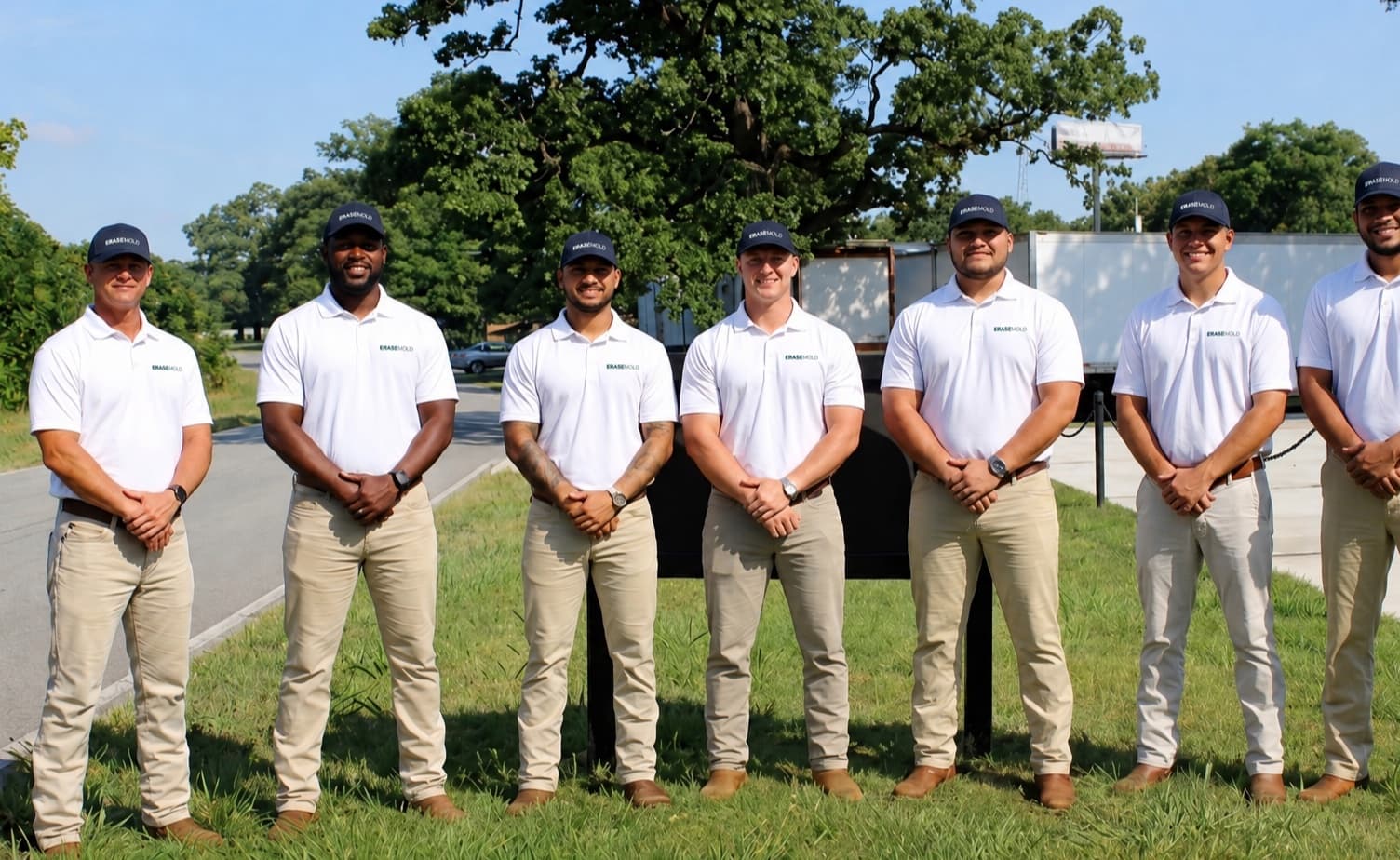
Why Metro Atlanta Homeowners Call Erase Mold
We are a local crew that does mold and water work the right way: find the moisture source, contain the area, and document the job so you know exactly what happened and why.
- Local to Metro Atlanta and its humid climate
- We treat the cause, not just the surface mold
- Containment-first work to protect the rest of your home
- Plain-language answers and documentation at every step
The damp crawl spaces and basements where mold takes hold are also where radon enters a home, so our sister company Erase Radon handles radon testing and mitigation for the same Metro Atlanta homes.
Request an InspectionFrequently Asked Questions
Why does fire restoration involve water damage too?
Putting a fire out usually involves a significant amount of water, which can soak floors, walls, and hidden cavities. If that water is not dried out, it can warp materials and, because mold can begin to grow within 24 to 48 hours, lead to a mold problem on top of the fire damage. That is why drying is a normal part of fire and smoke restoration, not a separate concern.
Can smoke odor really be removed, or only covered up?
Deodorization works to address smoke odor in the affected materials at its source rather than mask it with a fragrance. The realistic outcome depends on how deeply the smoke penetrated and which materials were affected, since some heavily saturated materials are removed rather than treated. We focus on cleaning and deodorizing what can be saved and removing what cannot.
Do you handle both homes and businesses?
Yes. Fire and smoke restoration applies to residential and commercial properties. The work follows the same principles in both, securing the property, removing soot and residue, controlling odor, drying out firefighting water, and repairing the structure, with the scope and sequencing planned around how the building is used.
What happens first after a fire?
The first priority is making the property safe and stable. That often means boarding up openings and securing the structure so it is protected from weather, further water, and intrusion, then assessing the fire, smoke, and water damage. Stabilizing the building first is what allows cleanup and repair to proceed in a sensible order.
Does insurance cover fire and smoke damage?
Fire damage is commonly covered by homeowners and commercial property policies, but the specifics, including smoke, water, and content coverage and any limits, depend on your policy. We cannot promise what your policy will pay, so review your own policy and contact your insurer about your situation. We can provide documentation of the damage and the work performed to support a claim.
Cost and Insurance
What affects the cost?
Every situation is different, so we do not quote a price before we know what we are dealing with. Cost depends on the size of the affected area, how much material has to be removed, how hard the growth or moisture is to reach, the type and extent of containment needed, and any moisture repairs behind the problem. You get a written estimate after an inspection, so the scope and what is included are clear before any work begins.
Will insurance cover it?
It depends on your policy and the cause. Sudden and accidental events, such as a burst pipe, are more often covered, while gradual leaks, long-term seepage, neglected maintenance, and flooding are commonly excluded or need separate coverage, and many policies cap mold-related costs. We cannot promise what your policy will pay, so review your own policy and speak with your insurer about your situation. We can provide documentation of the conditions we find and the work performed to support a claim.
Related Services
Water Damage & Mold
Remediation of the mold an everyday leak, appliance, or damp spot left behind, plus correcting the moisture source so it is far less likely to regrow.
Learn more →Mold Removal and Remediation
Containment, removal of mold-affected materials, cleaning of salvageable surfaces, and correction of the moisture source behind the growth.
Learn more →Mold Service Across Metro Atlanta
We provide fire & smoke damage restoration and the rest of our mold services throughout the Metro Atlanta area. Find help in your city or county:
- Mold removal in Atlanta
- Mold inspection in Sandy Springs
- Mold removal in Marietta
- Mold remediation in Roswell
- Mold inspection in Alpharetta
- Mold removal in Decatur
- Mold remediation in Smyrna
- Mold removal in Dunwoody
- Mold inspection in Brookhaven
- Mold removal in Johns Creek
- Mold remediation in Fulton County
- Mold removal in Cobb County
- Mold inspection in DeKalb County
- Mold removal in Gwinnett County
See all of the areas we serve across Metro Atlanta.
Concerned About Mold in Your Home?
Tell us what you are seeing or smelling and we will help you figure out the next step. Mold can begin to grow on damp surfaces within 24 to 48 hours, so it pays to look into it early.