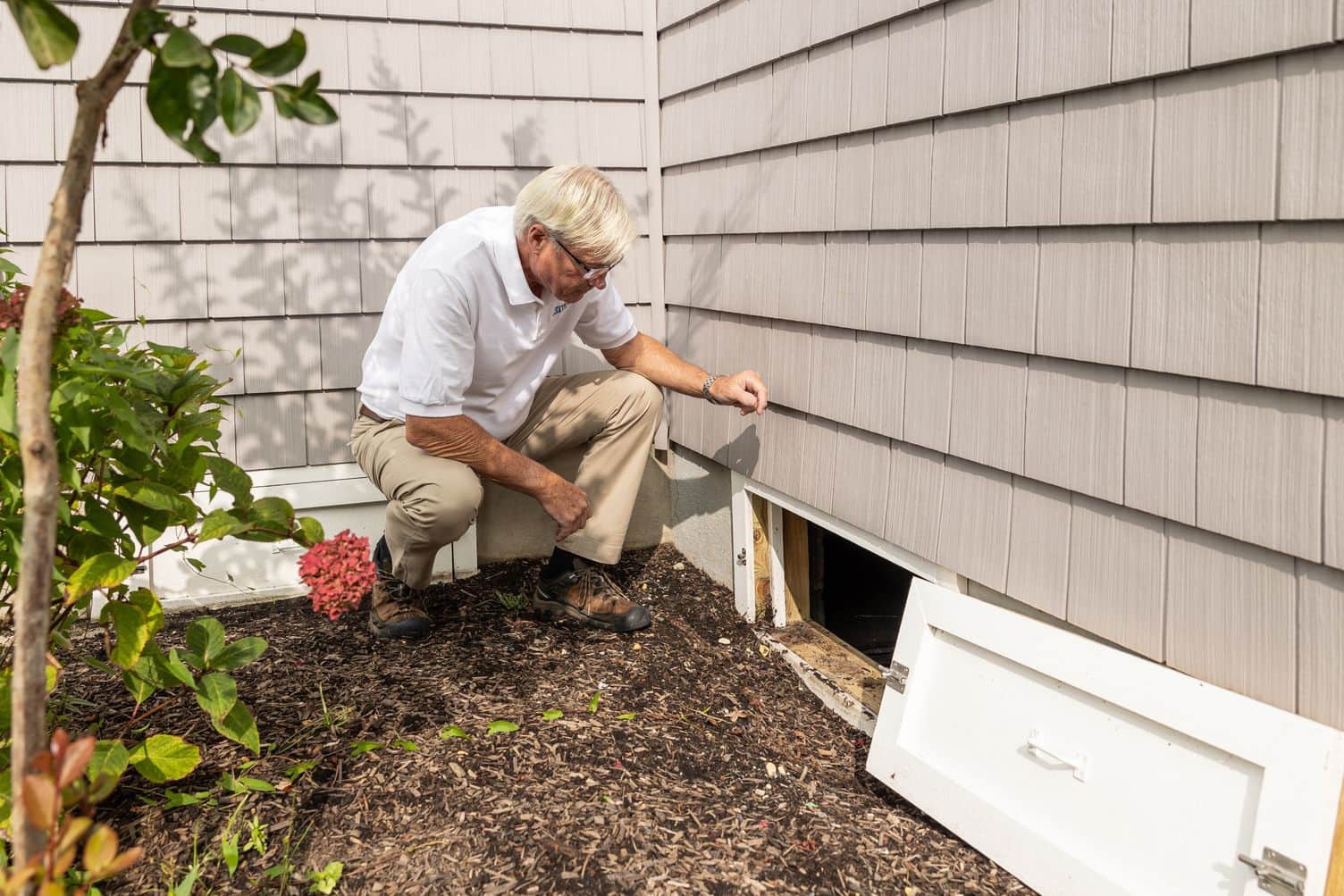
Mold does not always announce itself. It often grows out of sight first, behind walls, under flooring, or in a crawl space, before there is anything obvious to see. Learning the common warning signs helps you catch a problem early, when it is smaller and easier to address. The EPA is consistent on one underlying point: the key to mold control is moisture control. Almost every sign below is really a clue that water is getting in or staying somewhere it should not.
Here are seven signs worth paying attention to, and what each one usually means.
1. A Musty, Earthy Smell
Often the first thing people notice is a smell rather than a sight. Mold gives off a musty, earthy odor that tends to linger in basements, bathrooms, closets, and crawl spaces. If a room smells damp and stale even after you clean it, that odor is worth taking seriously. A persistent musty smell with no visible source frequently points to growth that is hidden behind a wall, under flooring, or inside a cabinet rather than out in the open.
2. Visible Spots or Discoloration
Mold shows up in a wide range of colors and textures: black, green, gray, white, or even pink and orange. It can look like scattered spots, a fuzzy patch, or a stain that keeps coming back. Common places to find it include the grout in showers, the corners of ceilings, the area around windows, and the back of closets along exterior walls. Do not get hung up on the color. The EPA does not treat one color as more dangerous than another. What matters is that mold is growing, which means moisture is present.
3. Water Stains and Discolored Patches
Yellowish or brownish stains on a ceiling or wall are a record of water that has been there. Even if the surface looks dry now, a stain means moisture reached that spot, and where moisture goes, mold can follow. A ring on a ceiling under a bathroom, a darkened patch near a window, or a discolored streak down a basement wall all deserve a closer look at what is behind them.
4. Peeling Paint, Warping, or Bubbling
When moisture is trapped inside a wall or under a floor, the finished surfaces start to give it away. Paint and wallpaper peel or bubble, drywall softens or bulges, baseboards and trim warp, and flooring cups or lifts at the seams. These cosmetic changes are often the visible edge of a moisture problem that is also feeding mold you cannot see yet.
5. Condensation and High Indoor Humidity
Mold thrives in damp air. The EPA and CDC recommend keeping indoor humidity in the range of roughly 30 to 50 percent, and growth becomes much more likely once humidity climbs above about 60 percent. Watch for condensation on windows, sweating pipes, or a clammy feeling in a basement or bathroom. In a humid climate like Metro Atlanta, where summers are warm and damp, indoor humidity can creep up without anyone noticing until mold appears. An inexpensive humidity meter takes the guesswork out of it.
6. Allergy or Respiratory Symptoms That Improve When You Leave Home
Pay attention to a pattern in how you feel. According to the CDC, exposure to damp and moldy environments can cause symptoms such as nasal congestion, a runny nose, sneezing, coughing, wheezing, and eye, throat, or skin irritation in sensitive people. A telling clue is timing: if these symptoms ease when you are away from the house for a day or two and return after you have been home, your indoor environment may be a factor. People with asthma or allergies often notice it first.
7. A History of Water Damage or Leaks
Past trouble is a strong predictor of present mold. A roof leak, a burst pipe, a flooded basement, an overflowing appliance, or a slow drip under a sink can all seed growth, sometimes long after the water is gone. The EPA notes that mold can begin to grow on damp surfaces within 24 to 48 hours, so even a quickly wiped-up spill can leave a problem inside the wall or under the floor if the material stayed wet. If your home has had any of these events, especially ones that were not fully dried out, treat that history as a reason to keep an eye out for the signs above.
When to Bring in a Professional Inspection
A small patch of surface mold in a well-ventilated spot is sometimes manageable on your own. The EPA suggests that areas larger than roughly 10 square feet, or situations following significant water damage, generally warrant a professional. When you suspect hidden growth but cannot see it, air and surface mold testing can help confirm what is present. Beyond size, a few situations point clearly toward an inspection:
- You smell mold but cannot find the source.
- Growth keeps returning after you clean it.
- You have had a major leak, flood, or other water event.
- Someone in the home has asthma, allergies, or a weakened immune system.
- You are seeing several of the signs above at once.
A professional mold inspection can locate hidden moisture and growth that is easy to miss, identify the water source feeding it, and tell you how far it has spread before you decide what to do. If several of these signs sound familiar, scheduling an inspection is a low-pressure way to find out what you are actually dealing with rather than waiting to see whether it spreads.