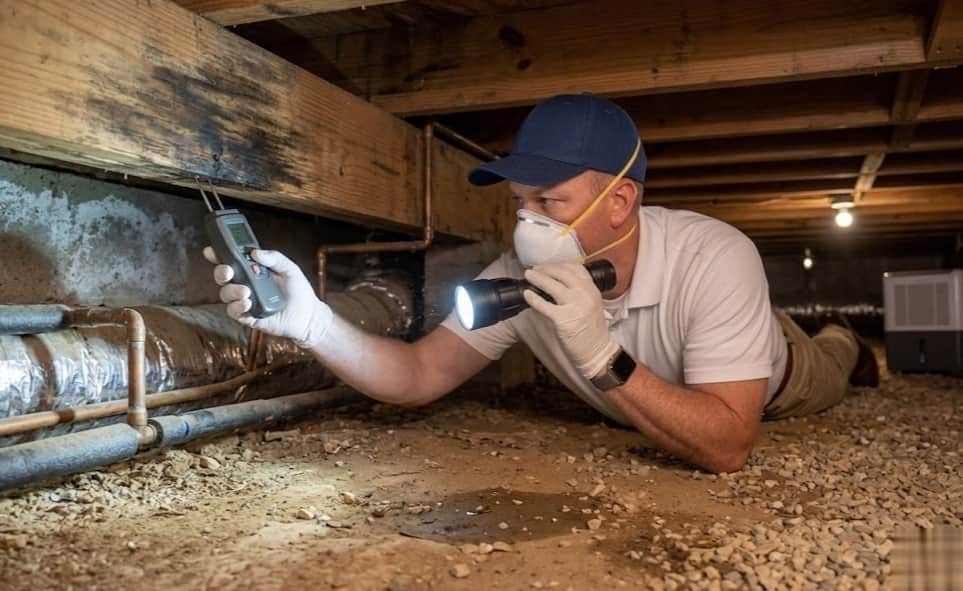
If there is one place mold loves in a Metro Atlanta home, it is the crawl space. The combination of conditions down there is close to ideal for growth: many older local homes were built over bare dirt without a vapor barrier, sitting on red clay that drains slowly and holds moisture, all wrapped in a climate that stays humid for much of the year. The result is a dark, damp, out-of-sight space where mold can spread across joists, subfloor, and insulation for a long time before anyone catches on.
Encapsulation is the most reliable way to break that cycle. This guide explains why Atlanta crawl spaces grow mold in the first place, what encapsulation actually involves, and how it protects both the air upstairs and the wood structure holding your floors up.
Why Atlanta Crawl Spaces Grow Mold
Vented dirt crawl spaces let moisture in
For decades, the standard approach was to leave crawl space vents open to the outdoors, on the theory that outside air would dry the space out. In a humid climate like ours, that logic works backward. Warm, moist outdoor air flows in through the vents and meets the cooler surfaces under your floor, where it condenses into liquid water on framing and the underside of the subfloor. Open vents end up importing humidity rather than removing it.
Ground moisture and red clay drainage
A bare dirt floor is a constant moisture source. Water moves up out of the soil and evaporates into the crawl space air around the clock. Atlanta red clay makes this worse because it drains poorly, holding rainwater near the foundation and keeping the ground under the house damp well after the weather clears.
The stack effect pulls crawl space air upstairs
Here is the part many homeowners do not realize: that crawl space is not sealed off from your living space. Warm air rises and escapes through the upper levels of a house, which creates suction that pulls replacement air up from the bottom, including damp, musty crawl space air. Studies of home airflow estimate that a large share of the air you breathe on the first floor started in the crawl space below. That is why a moldy crawl space so often announces itself as a musty smell in the rooms above. Damp air is not the only thing that hitches a ride upstairs either; crawl space radon seeps in from the same exposed ground and follows the same path into the living space.
What Crawl Space Encapsulation Is
Encapsulation means sealing the crawl space off from ground and outside moisture so it stays consistently dry. A complete encapsulation typically includes:
- A heavy-duty vapor barrier laid across the entire dirt floor and run up the foundation walls, with seams overlapped and sealed.
- Sealing or closing the foundation vents so humid outdoor air can no longer flow in.
- Air-sealing and insulating where appropriate to keep the space within the home's thermal envelope.
- A means of controlling humidity, usually a dedicated dehumidifier or conditioned air, to hold the space in a safe range.
The goal is straightforward: address the moisture at its source instead of repeatedly cleaning up the symptoms. That is exactly the principle the EPA emphasizes when it states that the key to mold control is moisture control. A dry crawl space simply does not give mold what it needs.
How Encapsulation Stops Recurring Mold
A clean-only approach to a crawl space tends to fail because nothing about the environment has changed. The vapor barrier and sealed vents cut off the supply of ground moisture and humid air, and a dehumidifier holds the remaining humidity in a range too low to support growth. With the moisture source removed, the conditions that fed the mold are gone, so it does not simply return the next humid season.
That said, encapsulation is not a substitute for removing mold that is already there, and that distinction matters when you are deciding what your home actually needs. If growth is already present, dealing with the existing mold is its own job, separate from sealing the space, because sealing a barrier over active growth without addressing it first just hides the problem. For homes in that situation, crawl space mold removal handles the existing growth and affected materials, while encapsulation is what keeps the space dry afterward so it does not come back. Knowing which of the two you need, or whether you need both, is the first decision to make.
Protecting Your Subfloor and Joists
Mold in a crawl space is not only an air-quality issue. The same chronic moisture that feeds growth also threatens the wood structure overhead. Persistently damp subfloor and floor joists can warp, lose strength, and eventually become vulnerable to wood-decay fungi and rot, which is a structural concern, not just a cosmetic one. Soft or springy floors upstairs are sometimes the first sign of trouble below. Keeping the crawl space dry protects that framing and helps preserve the integrity of the floors above it.
Is Encapsulation Worth It for Your Home?
For Atlanta homes with chronically damp crawl spaces, encapsulation often pays off in a drier, healthier home, more stable humidity upstairs, fewer recurring mold problems, and better protection for the structure. It tends to make the most sense when you have an ongoing moisture issue rather than a one-time event. If your crawl space stays dry on its own and a single leak was the whole story, you may not need it at all, which is why the worth-it answer really depends on your specific conditions.
Costs vary widely with the size of the crawl space, its current condition, drainage, and whether any standing water needs to be managed first. Because of that, an on-site inspection is the only reliable way to get an accurate estimate and to confirm whether existing mold needs to be addressed before the space is sealed. When you are ready to move forward, crawl space encapsulation is the service that seals the space against moisture, and if there is active growth to deal with first, crawl space mold removal is where that part of the work belongs.