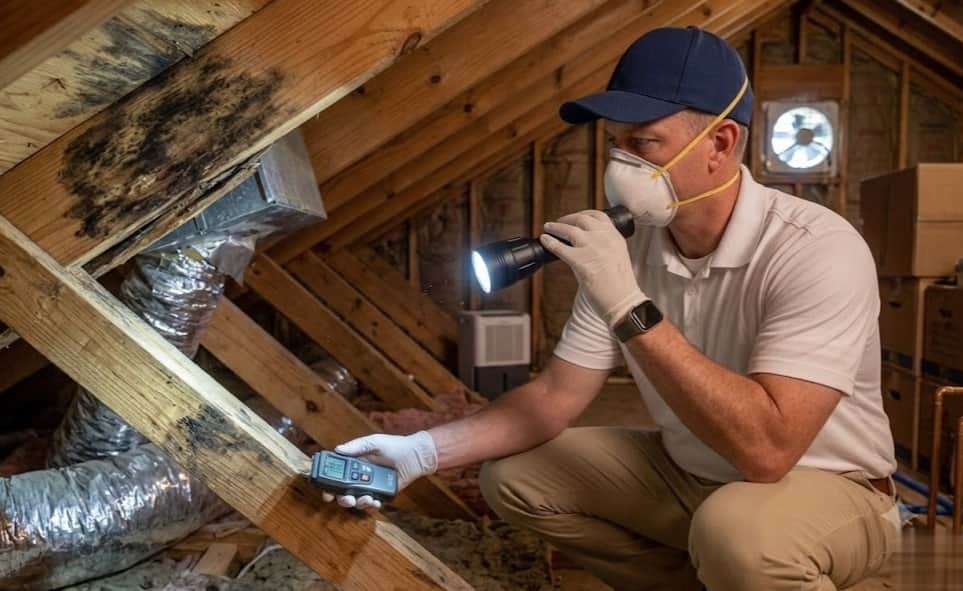
Attic mold tends to catch homeowners off guard because almost no one spends time up there. It often turns up during a roof replacement, a home inspection before a sale, or when someone finally tracks down a musty smell. Wherever it shows up, attic mold almost always traces back to a moisture problem overhead: either a roof leak keeping the wood damp, warm and humid air getting trapped under the roof, or exhaust fans dumping moisture right into the space. The mold is the symptom. The moisture is the cause, and the cause is what has to be fixed.
What Causes Attic Mold
Roof leaks
A leaking roof is the most direct cause. Water gets in around worn flashing, in roof valleys, at penetrations like vents and chimneys, or through aging or damaged shingles, and it keeps the underlying sheathing wet. Even a small, slow leak can sustain growth on the roof deck and rafters because the wood never gets a chance to dry out. Staining concentrated below a specific spot on the roof is a classic sign of a leak above it.
Bathroom and dryer fans venting into the attic
This is one of the most common and most preventable causes we see. A bathroom exhaust fan or a clothes dryer is supposed to carry moist air all the way to the outdoors. When the duct is disconnected, never extended, or simply pointed up into the attic, all of that warm, water-laden air is released directly into the space. It condenses on the cool roof sheathing and feeds steady growth, often right above the bathroom. A fan that vents into the attic instead of outside can create a mold problem all on its own, with no roof leak involved.
Poor attic ventilation
An attic needs balanced airflow, typically intake at the soffits and exhaust at the ridge, so that warm, humid air can escape rather than build up. When soffit vents are blocked by insulation or there is simply not enough ventilation, moisture and heat get trapped under the roof. That stagnant, humid air is exactly the environment mold needs.
Condensation on the roof sheathing
In a humid climate, warm moist air that reaches the cool underside of the roof deck condenses into liquid water, the same way a cold glass sweats on a summer day. Repeated condensation keeps the sheathing damp enough to support growth even without any leak. This is especially common where ventilation is poor and humid indoor air is finding its way up into the attic.
How to Spot Attic Mold
Look for dark gray or black staining, or a fuzzy appearance, on the underside of the roof sheathing and on the rafters, often concentrated near the eaves, around roof penetrations, or directly above a bathroom. A musty odor when you open the attic hatch, frost or moisture on the nails poking through the sheathing in cold weather, or water stains on the ceiling of the room below are all worth investigating. If you are not comfortable getting into the attic safely, that is a good reason to bring in a professional to look.
How to Fix Attic Mold
The order matters here. Cleaning the visible growth without correcting the moisture source is a temporary fix at best, because the conditions that created the mold are still in place. The EPA is consistent on this point: controlling moisture is what controls mold. A durable repair works the moisture problem first, then removes the growth.
Redirect fan venting to the outside
If a bathroom fan or dryer is exhausting into the attic, reroute the ductwork so it terminates outside the home through a roof or gable vent. This is frequently the single most important fix, and skipping it is the most common reason the problem comes back.
Improve soffit and ridge ventilation
Clear any insulation blocking the soffit vents, add baffles to keep airflow paths open, and make sure intake and exhaust ventilation are adequate and balanced so humid air can leave the attic. Good ventilation and moisture and humidity control keep the sheathing dry and discourage condensation.
Fix any roof leak
Repair the flashing, shingles, or penetration that is letting water in. Removing mold beneath an active leak accomplishes nothing if the leak keeps the wood wet.
Remove the mold and affected materials
Once the moisture source is corrected, proper attic mold removal means physically taking out the mold rather than just painting or spraying over it. Materials that are porous and heavily affected, such as insulation, may need to be removed and replaced, while structural wood is typically cleaned in place. An on-site inspection is the best way to pin down which moisture source is driving the problem in your attic and to map out the right repair before any cleanup begins.