Quick answer
If you have spotted a musty smell, a stain on the ceiling, or fuzzy growth behind a piece of furniture, the first practical question is what it will cost to have someone look at it properly. The good news is that a mold inspection is one of the more predictable expenses in this process. Unlike remediation, where the price swings widely based on what is hiding behind the walls, an inspection is a defined visit with a defined scope, so the ranges are fairly tight.
Below is what a professional inspection actually includes, what moves the price up or down, how testing changes the math, and when the EPA says you may not need testing at all.
What a Mold Inspection Includes
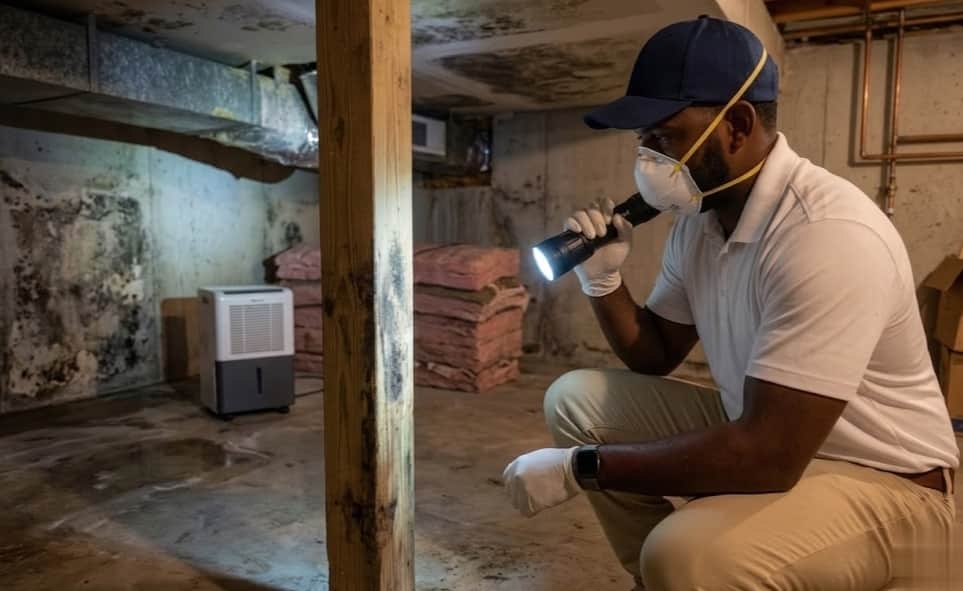
A proper mold inspection is a top-to-bottom look at the home with two goals: find any mold growth, and find the moisture that is feeding it. Mold does not appear without water, so an inspection that only looks for visible growth is only doing half the job.
A thorough visit typically covers:
- A visual check of living spaces, closets, bathrooms, and around plumbing fixtures
- Basements, crawl spaces, and attics, which is where Atlanta homes most often grow mold
- Moisture readings in walls, floors, and other suspect materials with a moisture meter
- Checking areas where leaks start, such as under sinks, around water heaters, and at roof penetrations
- A written summary of what was found and where the moisture is coming from
Some inspectors also use thermal imaging cameras to spot cool, damp areas behind drywall. That can be included or offered as an add-on depending on the company.
Typical Mold Inspection Cost Ranges
National cost guides from sources like Angi and HomeGuide put most professional mold inspections in the range of roughly $300 to $700, with small homes at the low end and large homes or homes with difficult access at the high end. Lab testing, when added, is usually priced per sample.
| Service | Typical range |
|---|---|
| Professional mold inspection (visual + moisture assessment) | $300 to $700 |
| Air sampling, per sample | $75 to $150 |
| DIY home test kit | $15 to $50 |
| Large home or hard-to-reach crawl space or attic | Toward the high end of the range |
These are market ranges from national cost guides, not quotes. Any real number for your home depends on an actual visit.
What Drives the Price Up or Down
Home size
More square footage means more rooms to walk, more surfaces to check, and more moisture readings to take. A small condo inspection is a shorter visit than a two-story house with a finished basement, and the price usually reflects that.
Crawl space and attic access
Crawl spaces are common in Metro Atlanta, and they are also where a lot of mold problems start. Getting into a tight crawl space or a low attic takes protective gear, time, and effort, so homes with those spaces often land higher in the range than slab-built homes of the same size.
Number of samples
If sampling is part of the visit, each air or surface sample adds to the bill. A basic assessment might take two or three samples, such as one outdoor baseline and one or two indoor locations. A larger home or a more complicated situation can call for more, and the cost scales with the count.
Lab fees and turnaround
Samples go to a lab for analysis, and the lab charges for that work. Standard turnaround is a few business days. Rush analysis, when a lab offers it, typically costs more. Ask up front whether lab fees are baked into the per-sample price or billed separately.
Inspection vs. Testing: They Are Not the Same Thing
These two words get used interchangeably, but they are different services with different prices. An inspection is the human assessment: eyes, flashlight, moisture meter, and judgment. Testing, or mold testing, means collecting physical samples of air or surfaces and sending them to a laboratory to identify what is present and in what concentration.
Some companies bundle a set number of samples into their inspection price. Others quote the inspection and the samples separately. Neither approach is wrong, but you should know which one you are being quoted so you can compare bids fairly. A $400 inspection that includes three samples is not the same offer as a $400 inspection where each sample adds $100.
When the EPA Says You May Not Need Testing at All
Here is the part of this article that could save you money. The EPA's guidance is direct: in most cases, if visible mold growth is present, sampling is unnecessary. The reason is simple. No matter what species the lab report comes back with, the answer is the same. The mold has to be removed and the moisture source has to be fixed. The EPA also notes that there are no federal limits for mold or mold spores in the air, so a lab number cannot be checked against any official standard.
So if you can already see mold on the wall, paying for pre-testing often just adds cost without changing the plan. Testing earns its keep in different situations: when you smell mold but cannot find it, when you want to check air quality after a cleanup, or when you need documentation for a home sale, an insurance claim, or a landlord dispute. An honest company will tell you when testing is worth it and when it is not.
One EPA rule of thumb worth knowing for budgeting: the agency suggests that a small patch of mold, less than about 10 square feet, is generally something a homeowner can clean up themselves. Larger areas, or mold tied to sewage or major water damage, call for professional help.
Free Inspection Offers: What to Understand First
Some companies advertise free mold inspections. That is not automatically a red flag, but it helps to understand the business model. A company that inspects for free usually earns its money on the remediation job that follows, which creates a built-in incentive to find work that needs doing. The inspection and the sales visit become the same visit.
A paid, independent inspection separates those two roles. The inspector is paid for the assessment itself, whether or not any cleanup follows. If you do take a free inspection, protect yourself the same way you would with any contractor: ask for written findings with photos, ask what the moisture source is, and get a second opinion before agreeing to a large remediation job. Georgia does not license mold professionals, so there is no state credential to check. The written report, the photos, and how well the findings hold up to a second look are your main protection as a buyer.
DIY Test Kits vs. a Professional Inspection
Hardware stores sell mold test kits for about $15 to $50, and it is fair to ask why anyone would pay ten times that for a professional. The honest answer is that the two products answer different questions.
Most DIY kits are settle plates: a dish of growth medium that you leave out, then mail to a lab or watch for growth. The problem is that mold spores are present in virtually every home on earth, so a dish that grows mold tells you almost nothing. It cannot tell you whether your indoor levels are unusual, where the mold is growing, how far it has spread, or what moisture problem is feeding it. A kit can technically confirm that mold exists in your air, which was never in doubt.
A professional inspection answers the questions that actually drive decisions: is there active growth, how much, where, and what water source is causing it. If sampling is warranted, a professional collects calibrated air samples with an outdoor baseline for comparison, which is what makes the lab numbers meaningful. If money is tight, skipping the DIY kit and putting that money toward a proper inspection is usually the better trade.
What Happens After the Inspection
A good inspection ends with a written report: what was found, where, photos of the affected areas, moisture readings, and the likely water source. If remediation is recommended, you should receive a written scope of work that spells out exactly what will be done and what it will cost, based on what was actually observed in your home. For context on that next step, national cost guides put professional remediation at roughly $10 to $30 per square foot; our guide to mold remediation cost in Atlanta breaks down the full ranges.
What you should never feel after an inspection is pressure. A same-day hard sell, scare language about toxic mold, or a push to sign before you have read the report are all signs to slow down and get another opinion. Mold problems are real, but very few of them are emergencies that cannot wait a few days for a second bid.
One scheduling note: homeowners often book indoor air assessments together, since one visit can flag more than one issue; our sister company covers radon testing cost the same way we cover mold. If you would like an inspection, or just a straight answer about whether your situation needs testing at all, contact us and we will walk you through it.
Frequently Asked Questions
How much does a mold inspection cost?
National cost guides such as Angi and HomeGuide put most professional mold inspections at about $300 to $700. Larger homes, hard-to-reach crawl spaces or attics, and added lab samples push the price toward the high end. Small homes with easy access sit at the low end.
Is mold testing included in a mold inspection?
Not always, and it is worth asking before you book. An inspection is the visual and moisture assessment of the home. Testing means collecting air or surface samples and sending them to a lab, and it is often billed separately, commonly around $75 to $150 per sample according to national cost guides.
Do I need mold testing if I can already see mold?
Usually not. The EPA says that if visible mold is present, sampling is generally unnecessary because the mold needs to be removed either way, no matter what species it is. Testing is more useful when you smell mold but cannot find it, or when you need documentation for a real estate deal or a landlord dispute.
Are DIY mold test kits worth it?
Home test kits cost about $15 to $50, but they have real limits. Mold spores are present in nearly every home, so a kit that grows mold in a dish does not tell you whether you have a problem, where it is, or what is causing it. A professional inspection focuses on finding the moisture source and the extent of growth, which a kit cannot do.
Should I use the same company for inspection and remediation?
It is a fair question to ask any company. When the same firm inspects and then sells the cleanup, there is a built-in incentive to find work. Some homeowners prefer an independent inspection, or at minimum a written report with photos and a clear scope, so they can compare bids. Georgia does not license mold professionals, so the written findings are your main protection.